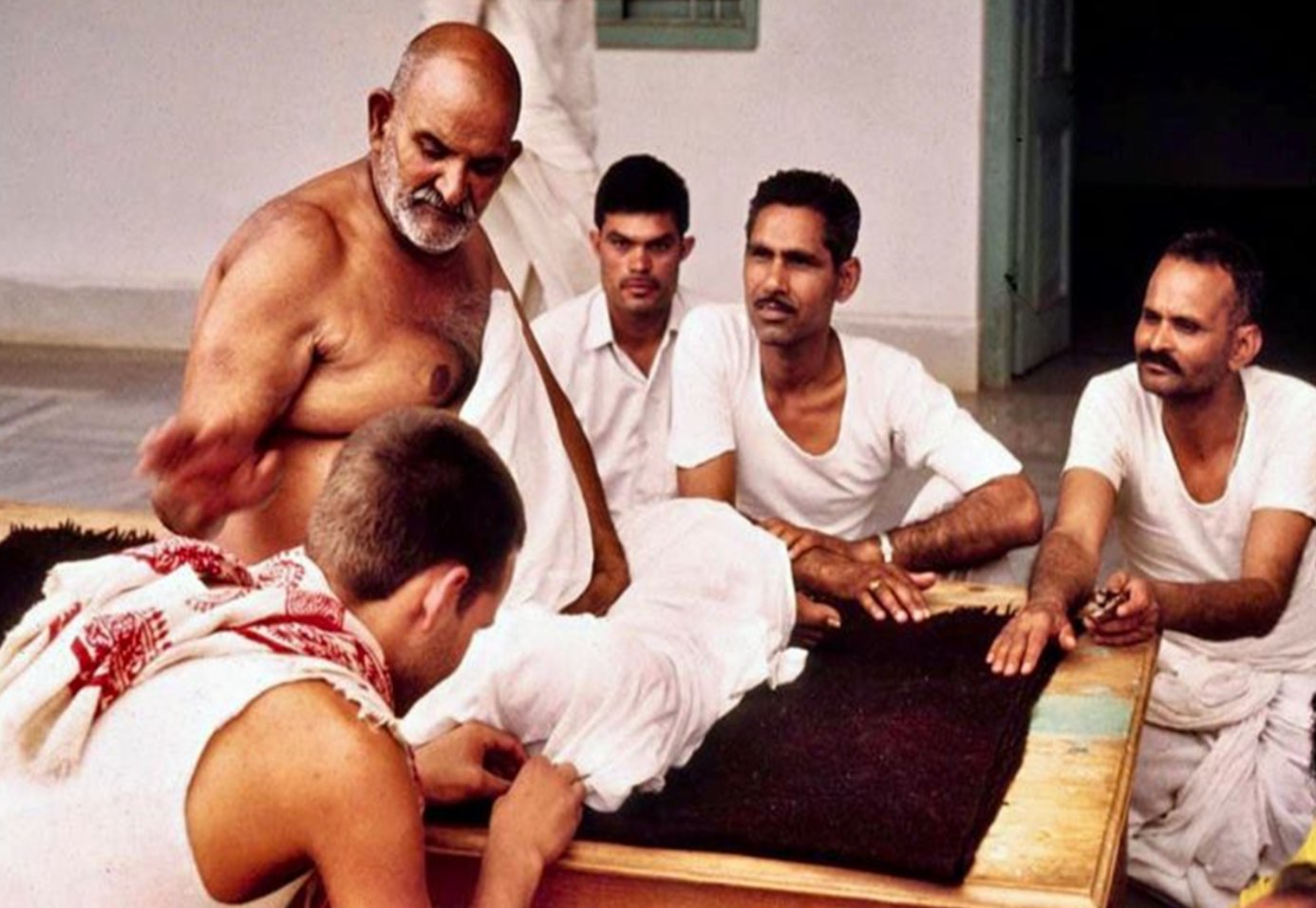
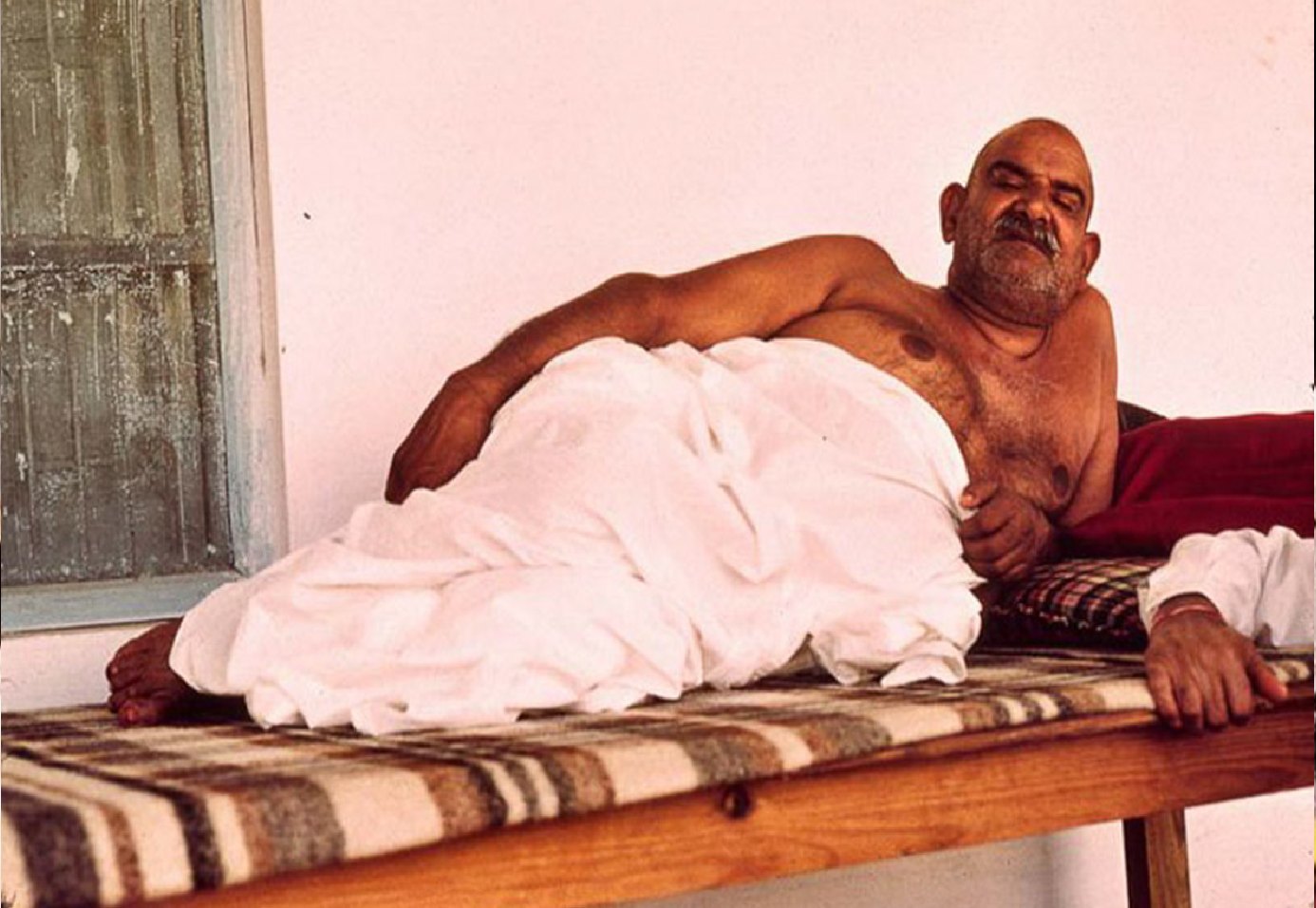
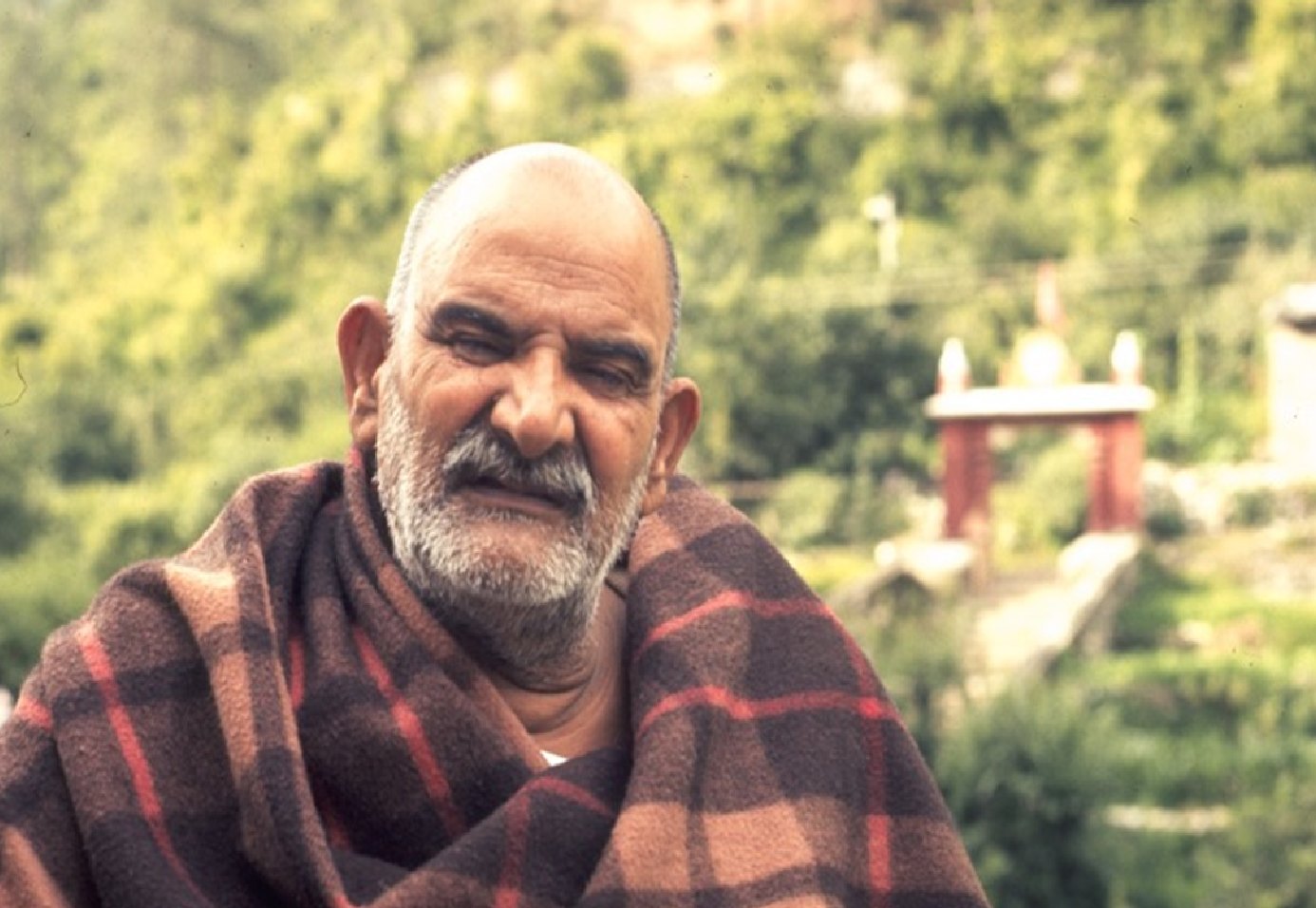
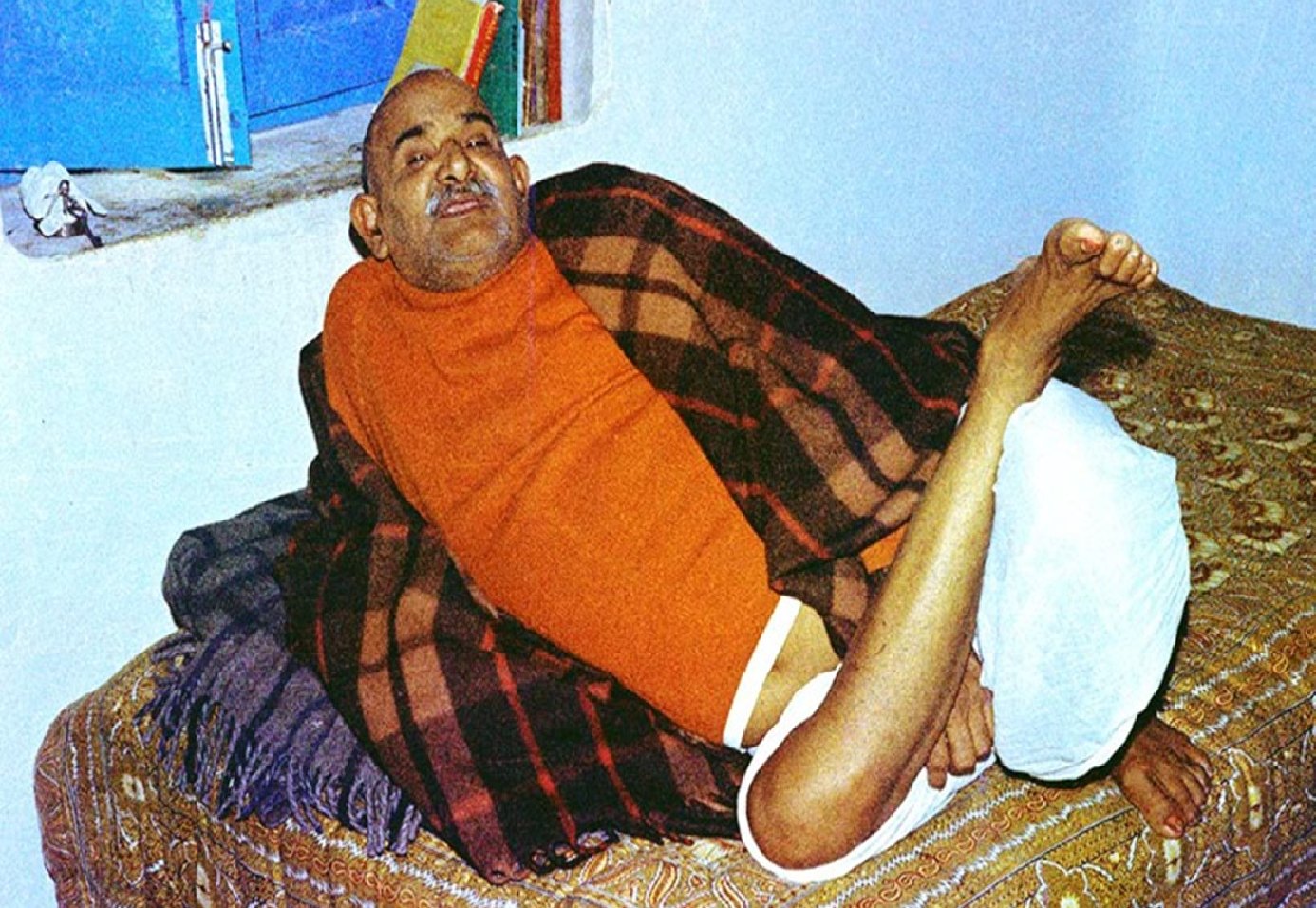
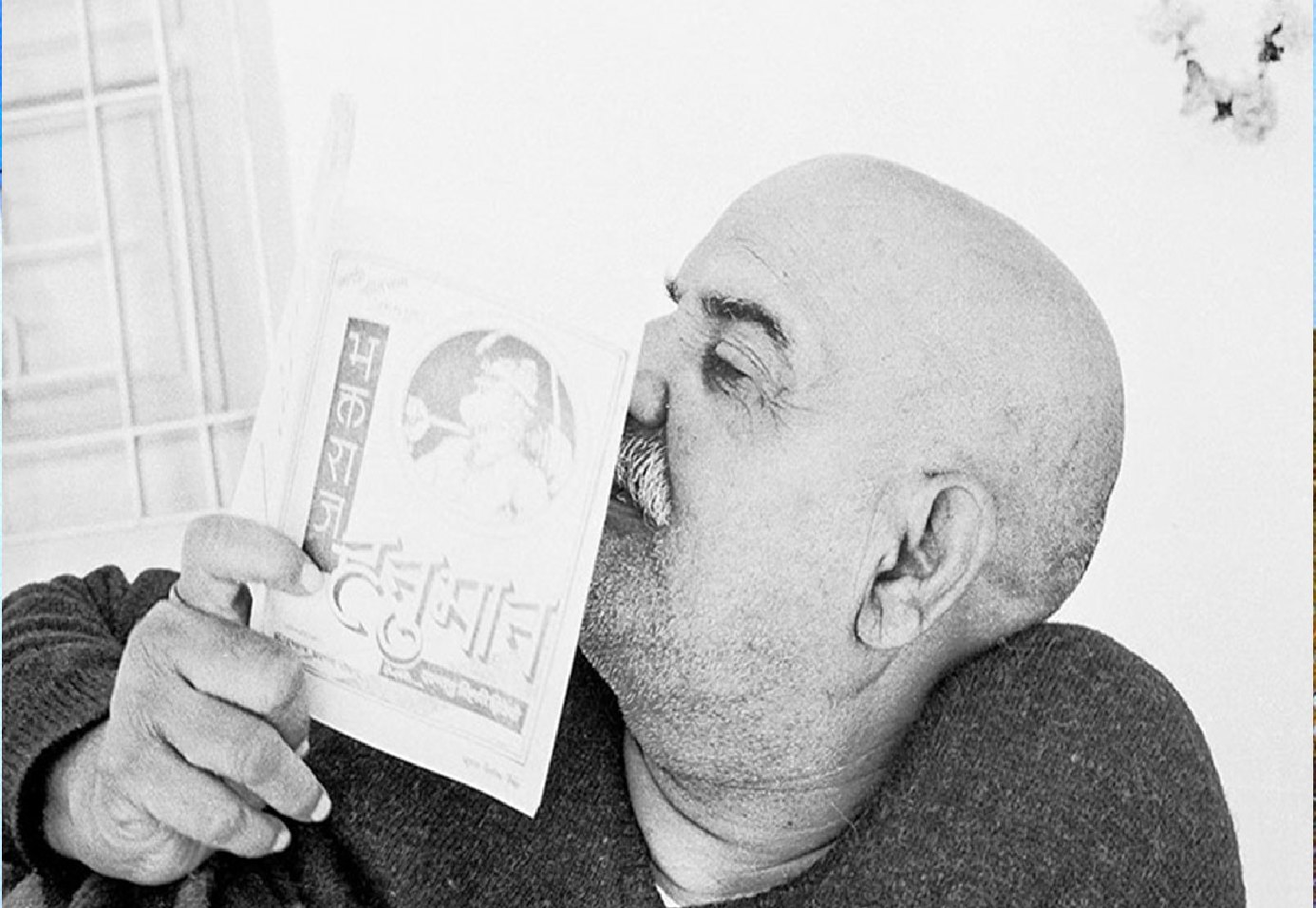
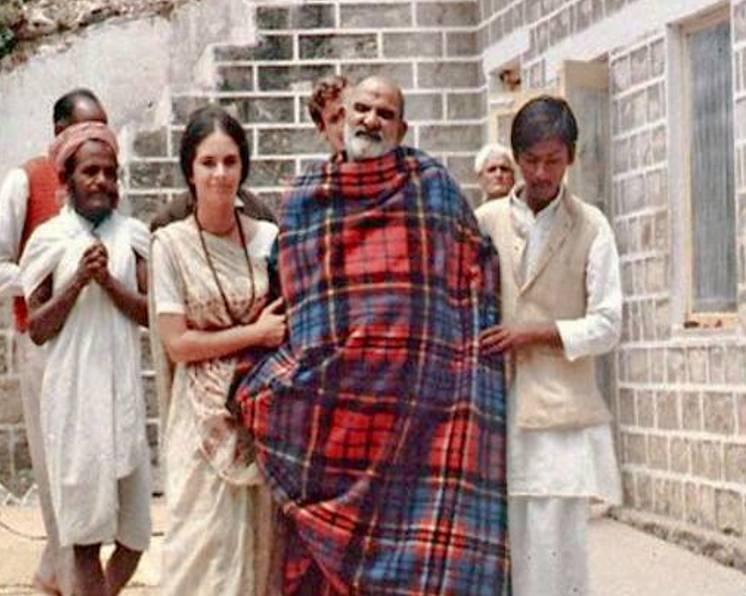
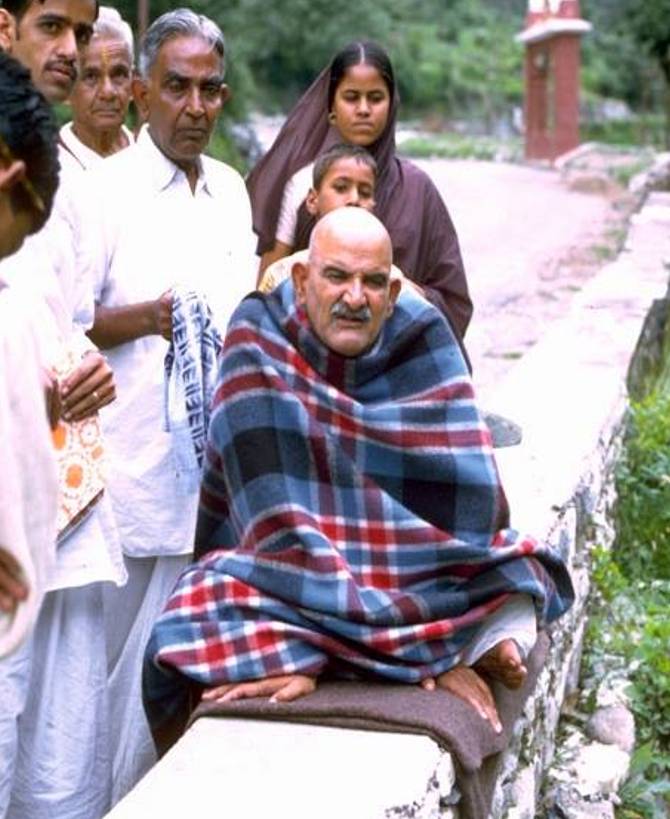
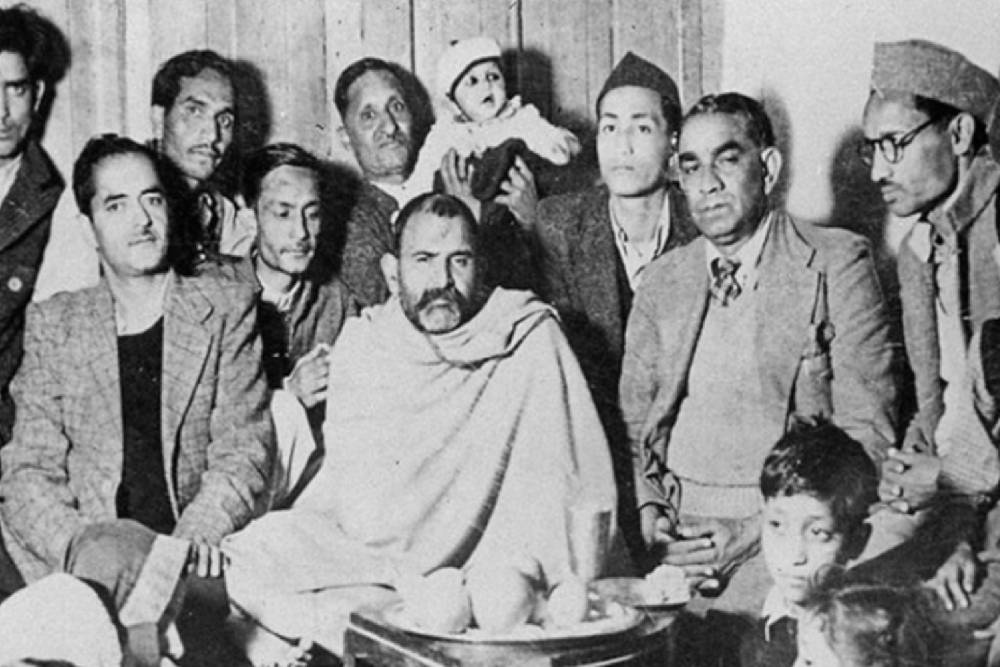
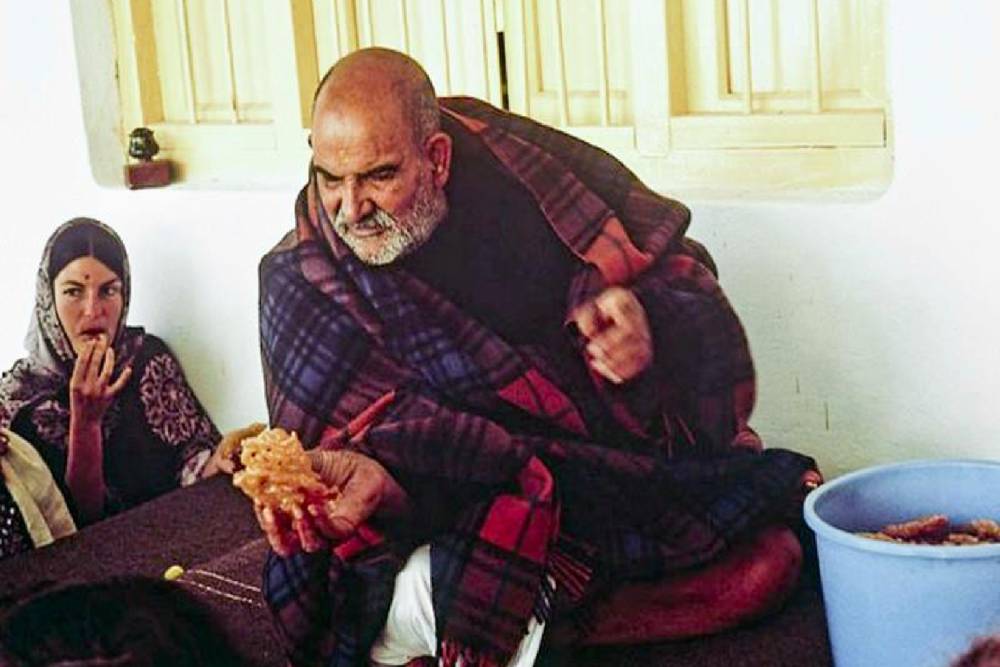
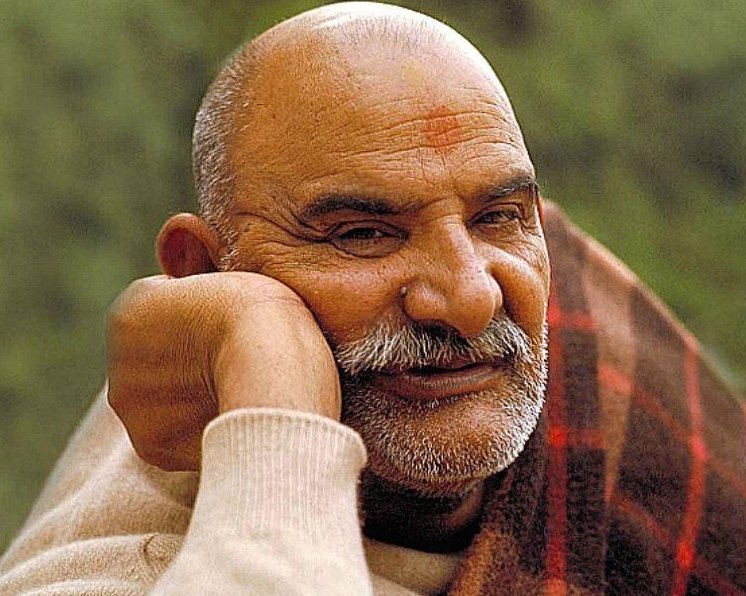
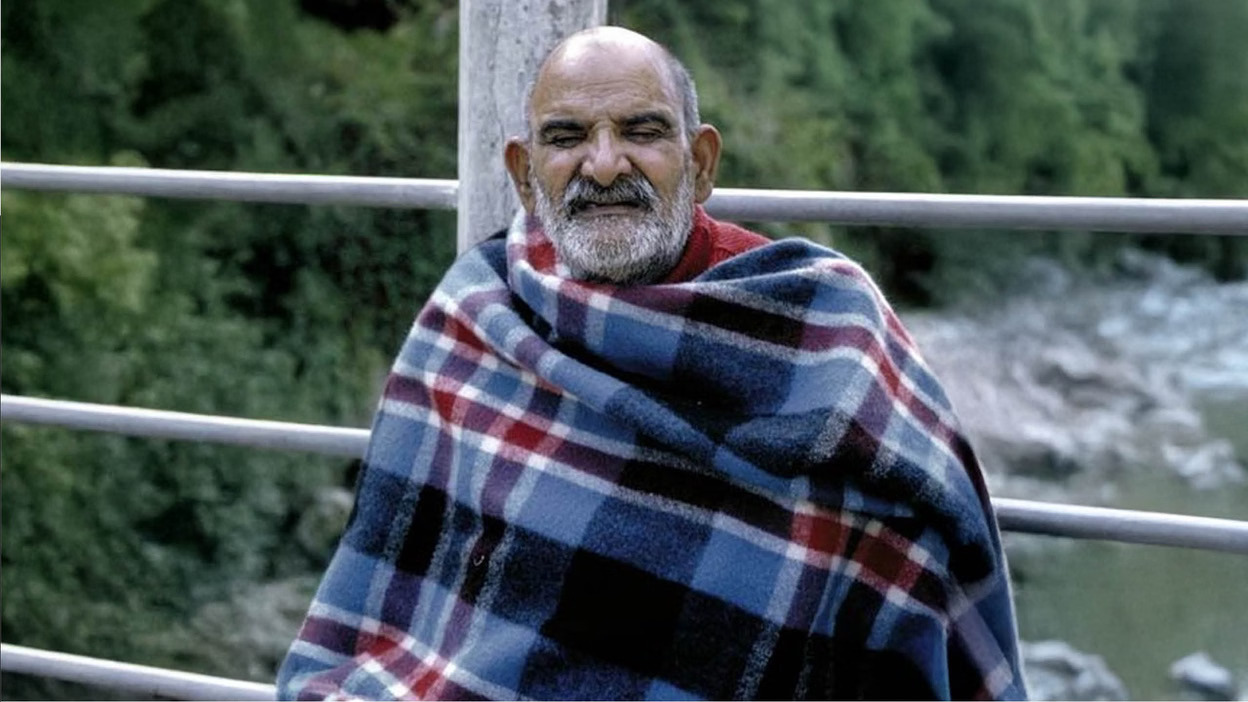
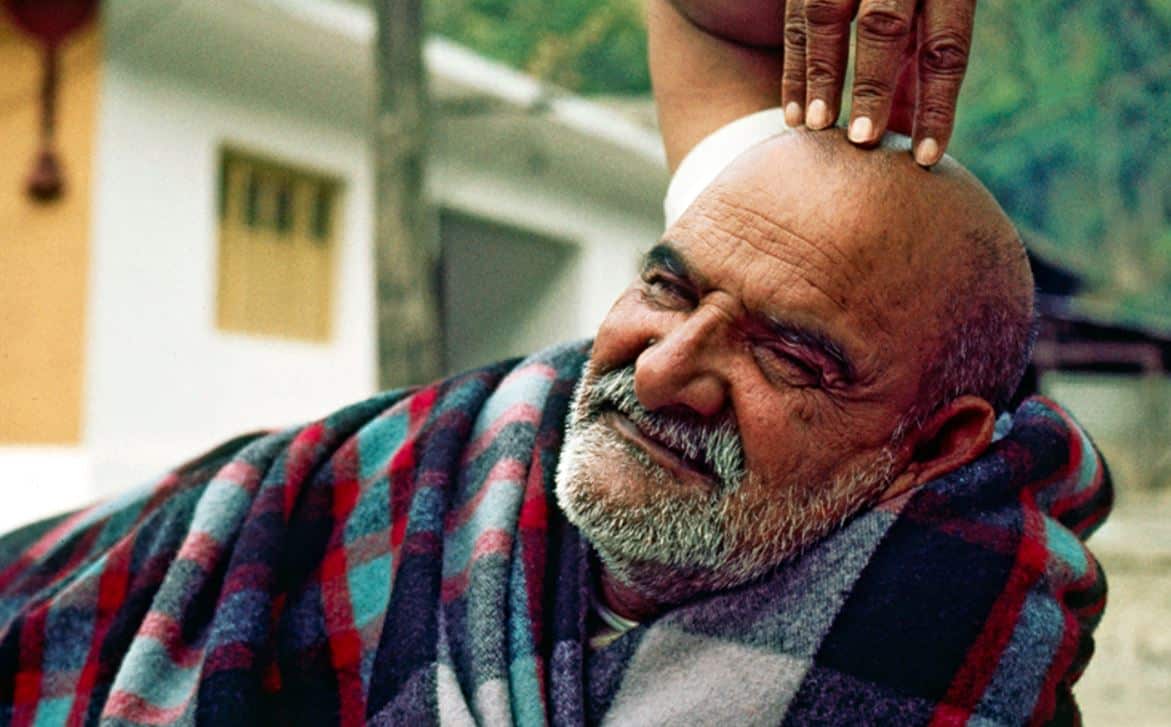
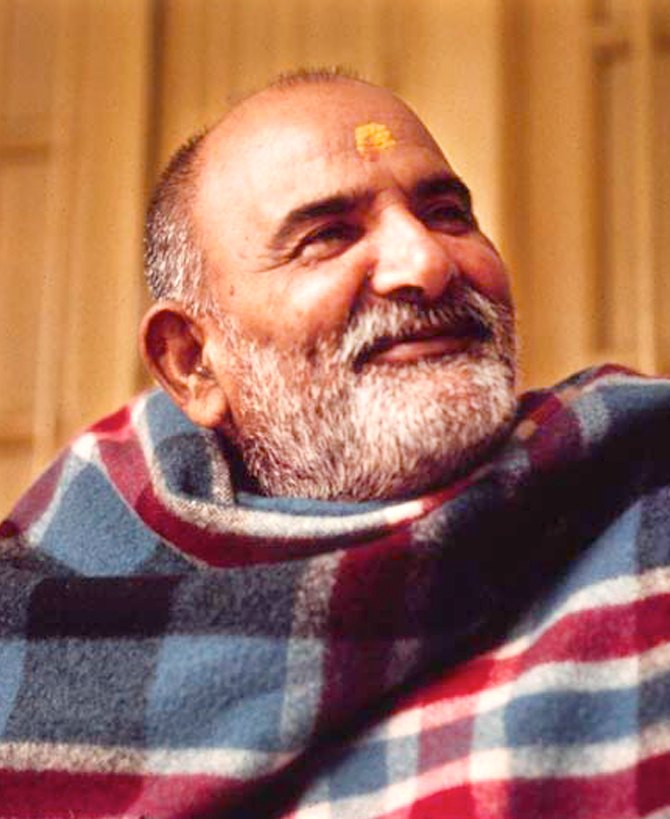
Neem Karoli Baba, also known as Maharaj-ji, was a highly revered Hindu saint and spiritual master known for his simplicity, compassion, and miraculous presence. Though his exact birth details remain uncertain, he is believed to have been born around the early 1900s in India. He left his physical body in 1973, but his teachings and influence continue to inspire millions across the world.
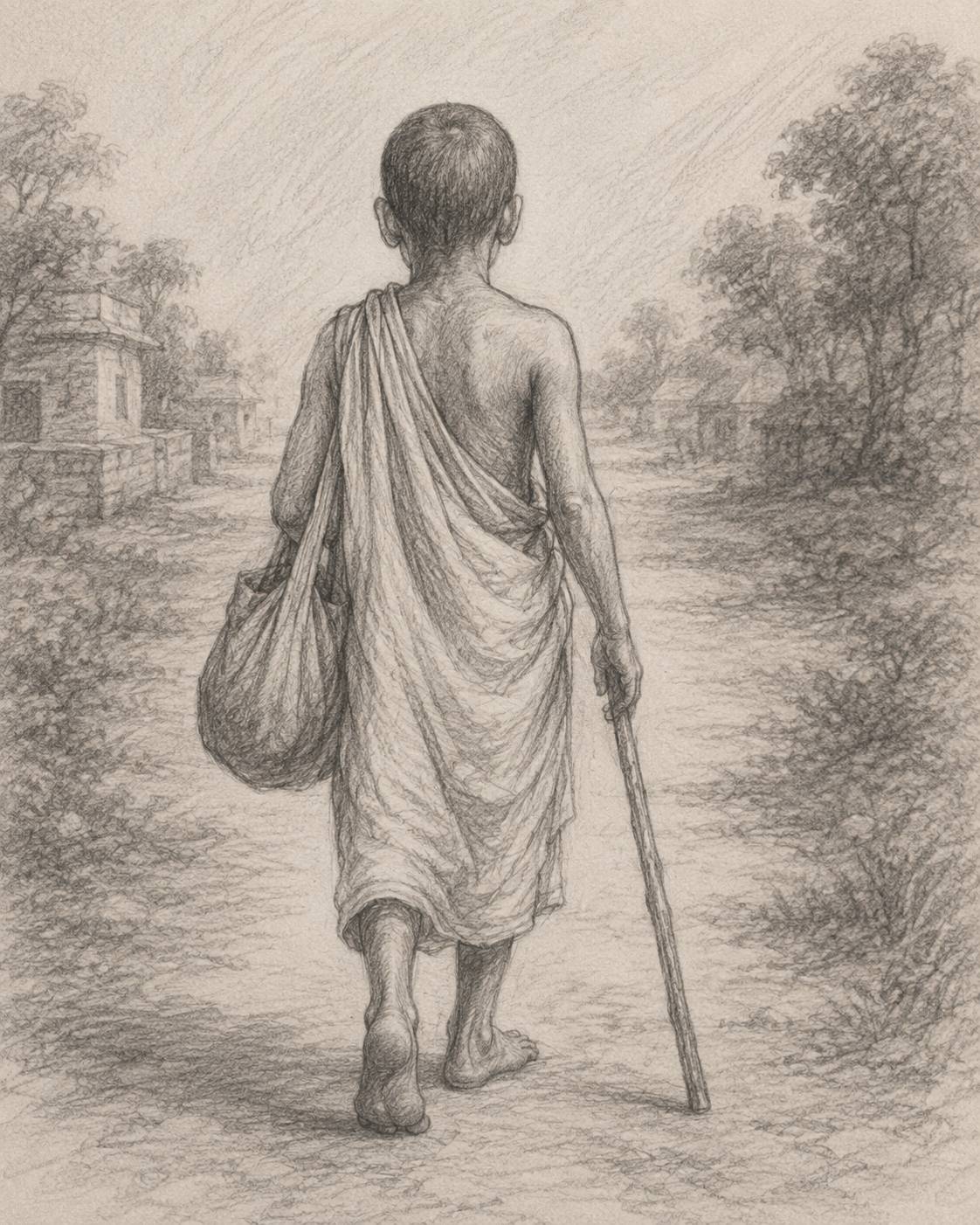
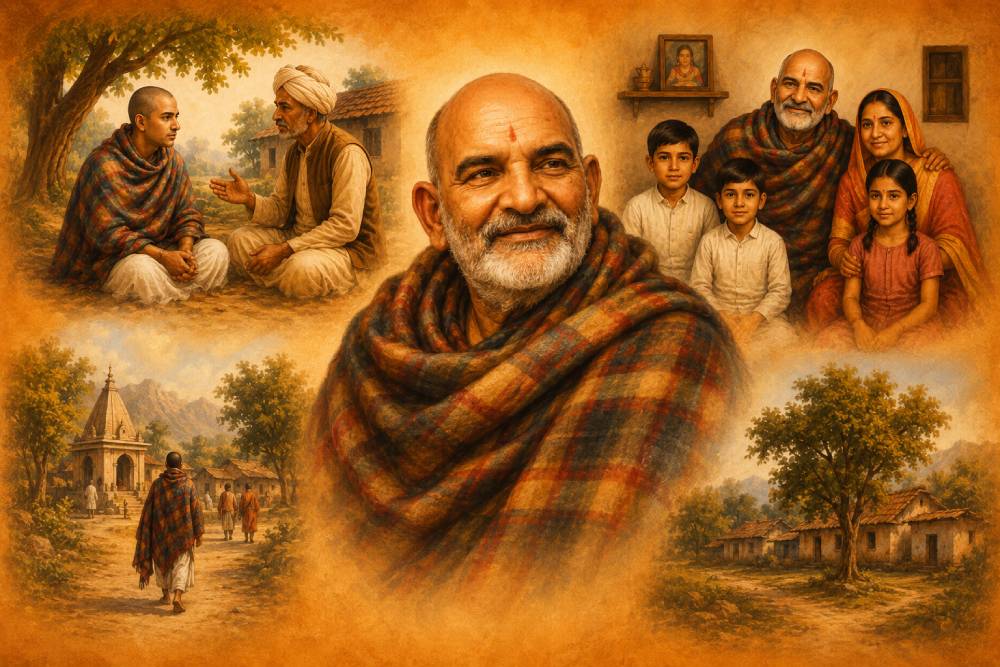
In the flourishing farmlands of upper Ganga plane, sprinkled with vitality of Yamuna, Sirsa, Arind and Senger rivers, Param-pujya Babaji was born to a Brahmin Jamindar family of Sri Durga Prasad Sharma and Smt. Kaushalya Devi in a small village named Akbarpur in Firozabad district of Uttar Pradesh (India); on a cool, crisp pre-winter day of shuklapaksha ashtami in margsheersh month (coinciding with 28th Nov. 1900). His childhood name was Sri Laxman Narayan Sharma. When he was of 8-9 years only, Smt. Kaushalya Devi passed away. As it was customary those days, at a young age of 11 years he was married to Smt. Rambeti Sharma. However, the grihastha life could not bind him and he left home and became a wandering hermit only at the age of 12 years.
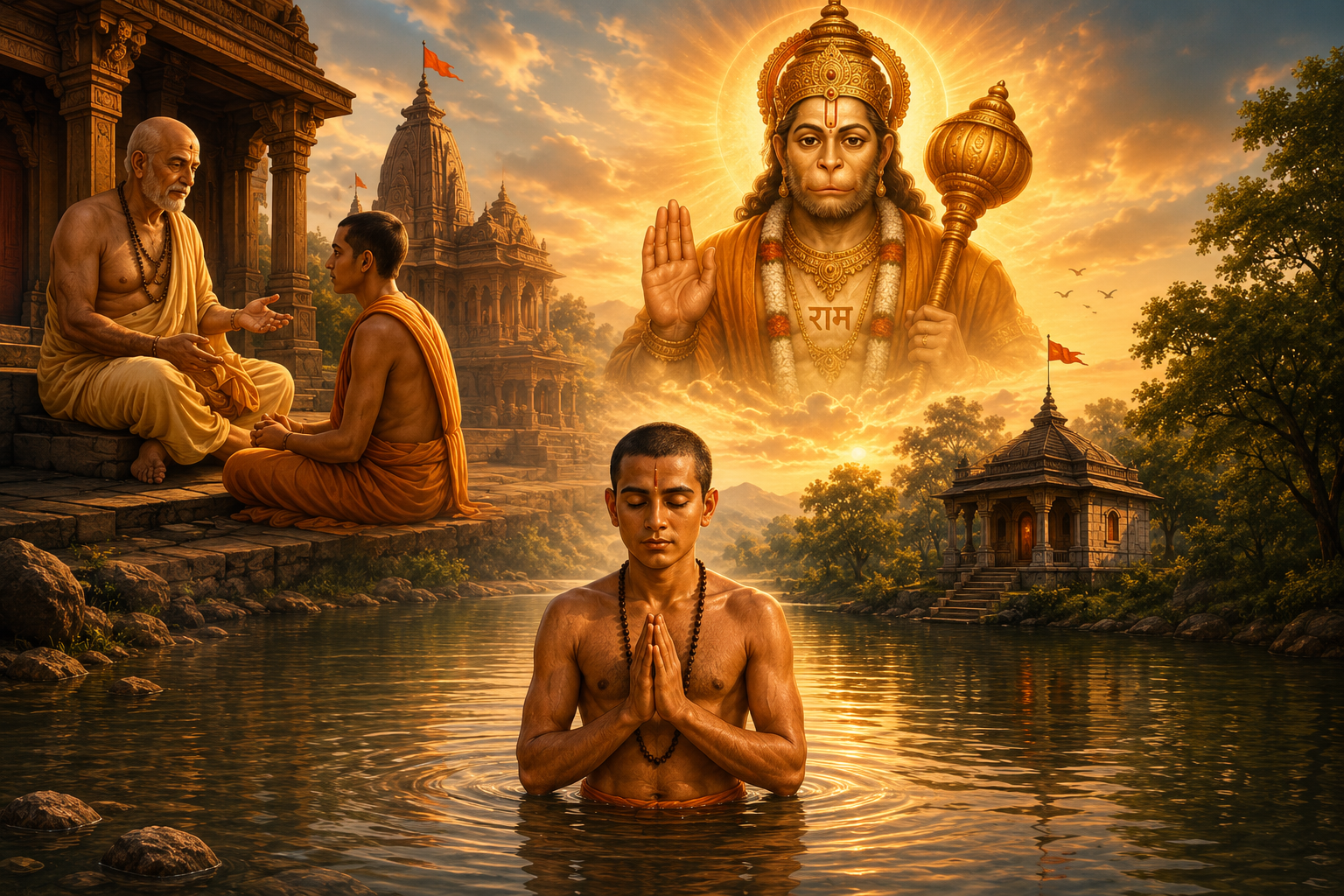
In spiritual pursuit, he kept travelling several places and came in contact with several self-realized Saints. As per the limited records available, he went to Rajasthan and then Rajkot (Gujrat) where he stayed in a temple. The Head priest was so much impressed that he declared him as his next successor. However, to avoid jealousy among his colleagues, he left the place and moved near Ramabai Ashram of Bavaniya village in Morbi district. He built his first temple of Lord Hanuman where in the cold water of a nearby pond he used to stand for days together, chanting Ram-Ram-Ram. He did rigorous Tapasya and got all the Sidhis with the blessings of Lord Hanuman, only at the age of 17. There he was popularly known as Talaiya Baba (the saint of the pond).
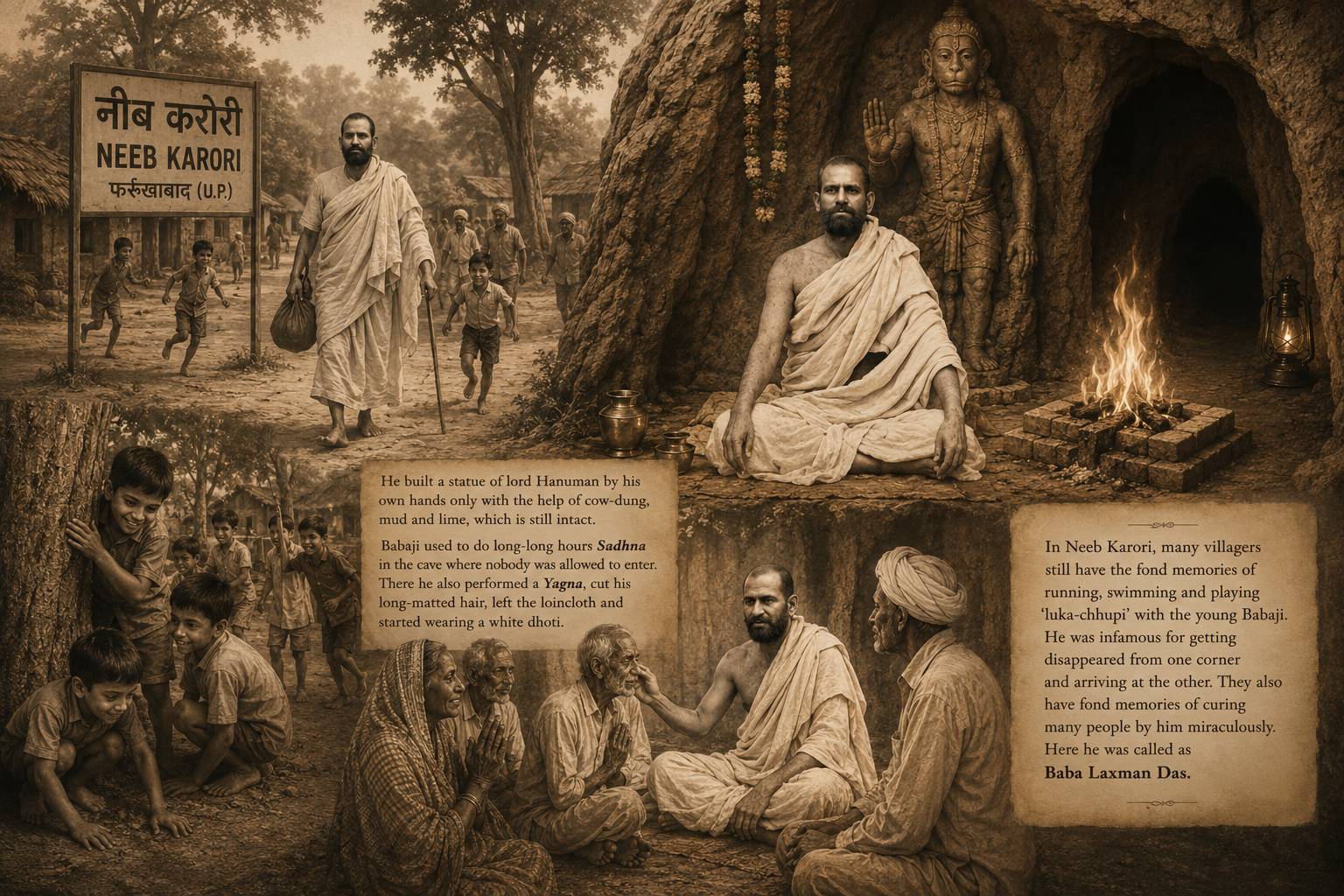
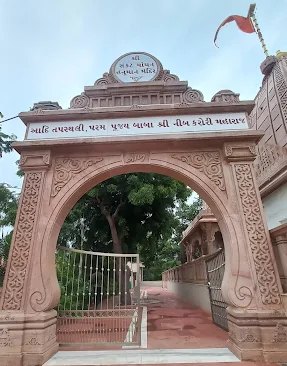
After a few years, he left Bavaniya and kept travelling across the country. Finally, sometime in 1918 he reached ‘Neeb Karori’ village of Farrukhabad district in Uttar Pradesh. He wanted to rest there for a short while. However, the love and devotion of the villagers didn’t allow him to go. They built underground caves for him to do his Sadhna. He built a statue of lord Hanuman by his own hands only with the help of cow-dung, mud and lime, which is still intact. Babaji used to do long-long hours Sadhna in the cave where nobody was allowed to enter. There he also performed a Yagna, cut his long-matted hair, left the loincloth and started wearing a white dhoti.
In Neeb Karori, many villagers still have the fond memories of running, swimming and playing ‘luka-chhupi’ with the young Babaji. He was infamous for getting disappeared from one corner and arriving at the other. They also have fond memories of curing many people by him miraculously. Here he was called as Baba Laxman Das.
While he was in Neeb Karori, somehow his father got a clue that his son was staying in a village of the neighboring district. He met him and reminded of his estranged wife. He requested him to come home and fulfil his worldly responsibilities. Babaji obeyed him and stayed with the family for a few years. He was blessed with two sons — Sri Aneg Sharma ji and Sri Dharm Narayan Sharma ji; and one daughter Smt. Girija Bhatele ji. However, the worldly affairs couldn’t bind him much and many times, he kept shuttling between Akbarpur, his native village and Neeb Karori.
Unhappy with greedy behavior of some locals, he left Neeb Karori around 1930 and went to Kilaghat near Fatehgarh Fort. There he changed heart of Colonnel Mckenna, the stringent Commanding Officer of the Rajputana regiment stationed in the fort.
He left Kilaghat around 1935 and continued traveling across the country. Once while visiting ‘Hanumangarhi’ temple of Ayodhya, the Head priest recognized him as an incarnation of lord Hanuman, which is still a common believe.
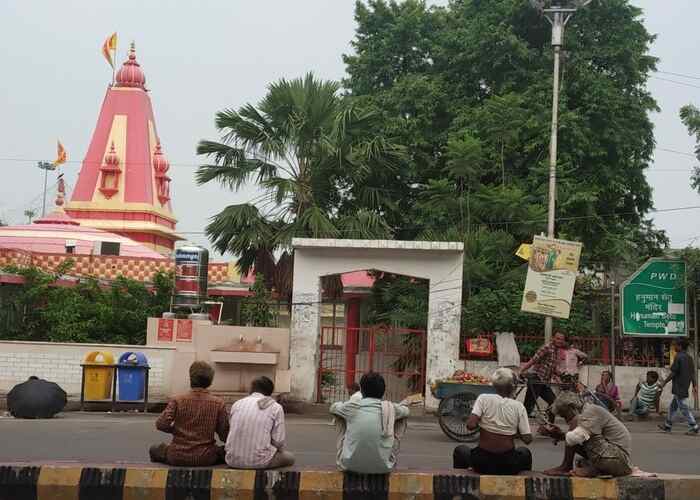
Around 1940s Babaji started frequenting the Kumaon hills of Uttarakhand. He touched many lives in Nainital and became very popular there. In chilly winters of the mountain, hundreds of people would accompany him, listen to him and stay with him even at the roadside without any proper arrangement of food & water. In 1950’s, the residents approached him complaining frequent landslide. He told “I cannot control that, but Hanumanji can”. He built a Hanuman temple on the Manora hills, two kilometers before Nainital, popularly known as “Hanumangarh”.
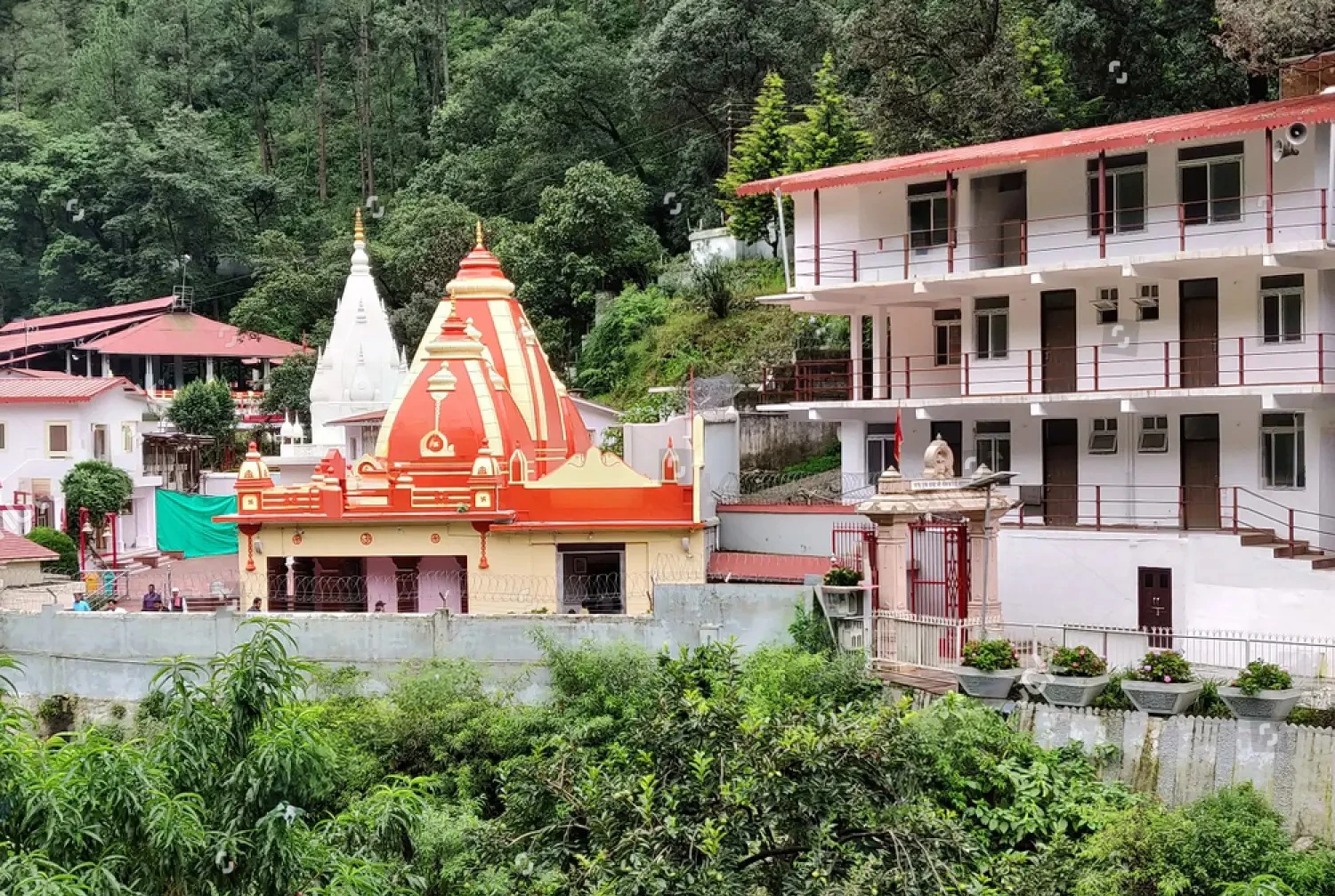
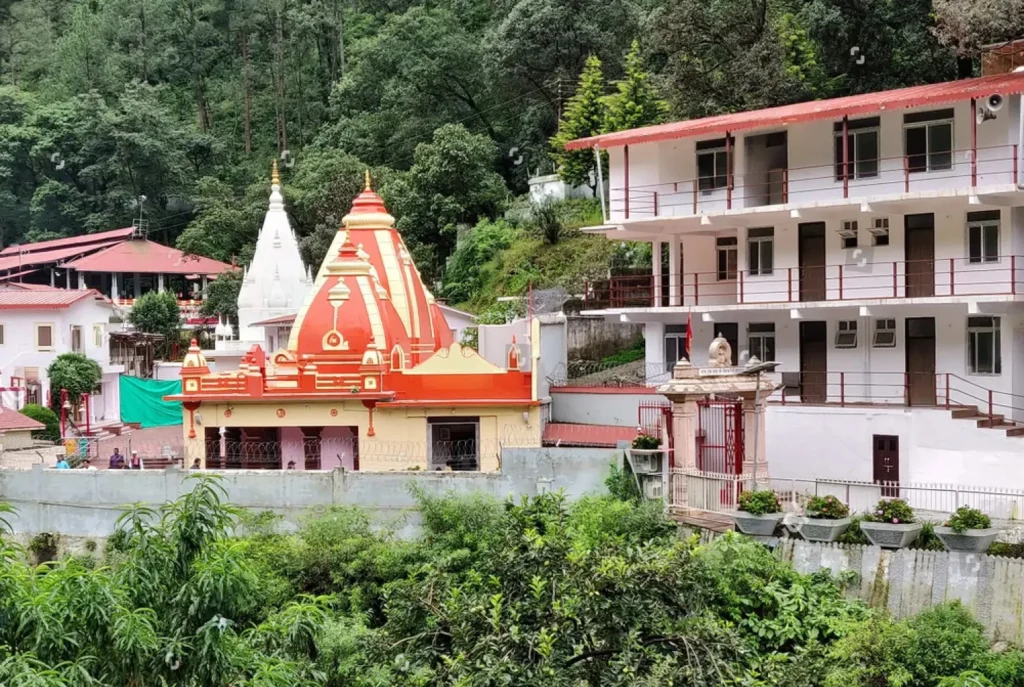
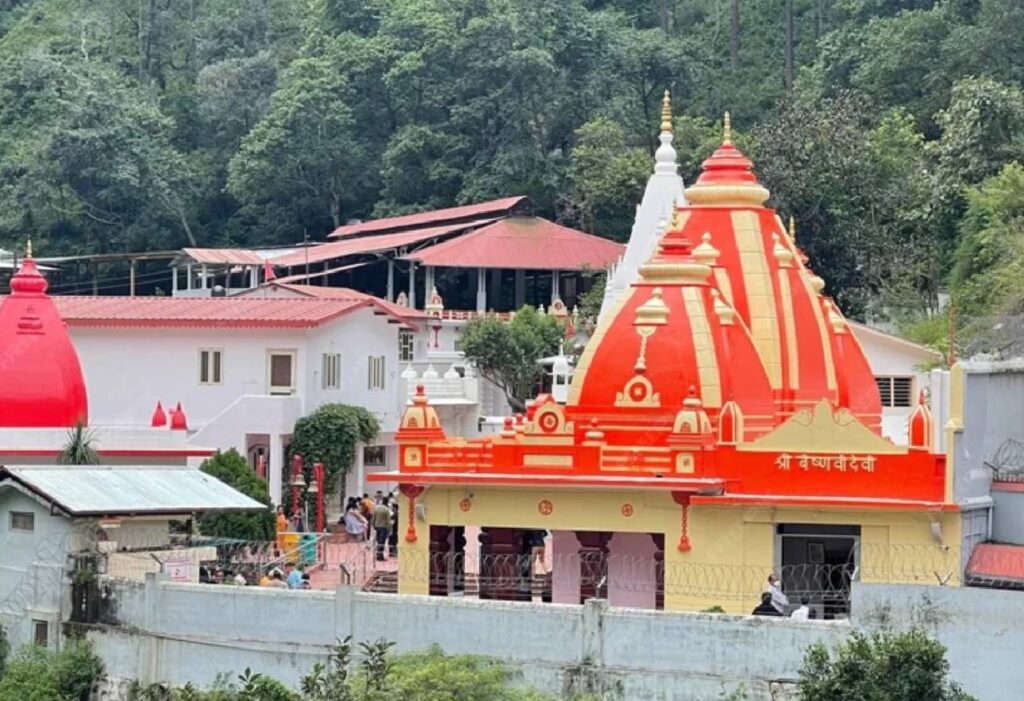
Subsequently, looking for the traces of an ancient saint “Somwari Baba” also regarded his spiritual mentor, he visited Kainchi village at the bank of Sipra river near Bhowali. With his divine abilities, he could trace his Cave and Dhuni, buried inside the mountain and wished to build a temple. As it was a forest land, he met with the then Chief Minister of Uttar Pradesh Sri Govind Vallabh Pant and obtained his permission. He built a Hanuman temple adjacent to the cave, which was completed on 15th June 1964. Babaji used to stay there and do Tapasya on a rock near a tree, completely dried or dead. He instructed his devotees to pour some Ganga water to it and after some time the tree miraculously sprout new green. Here he was popularly called as ‘Maharaj ji’. The Kainchi Dham now remains a prominent spiritual sanctuary for the disciples of Babaji.
He also renovated another cave related to Somwari baba at the banks of Koshi river, near Karkteshwar Mahadev temple where Swami Vivekanand had also meditated and got enlightenment in 1890. Located around 22 km from Kainchidham and 10-12 km from Khairna sub-division towards Almora, it is popularly known as Kakrighat.
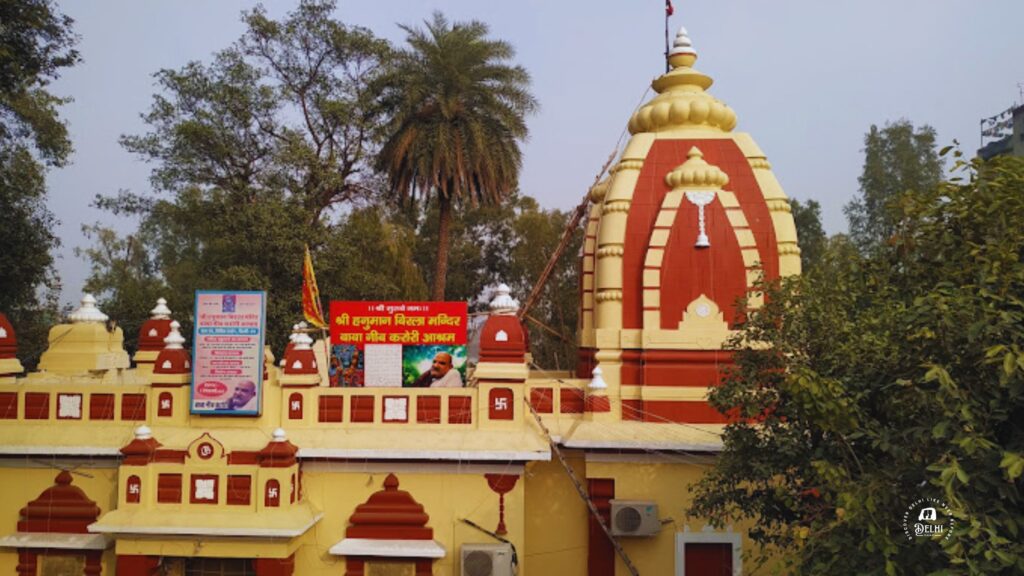
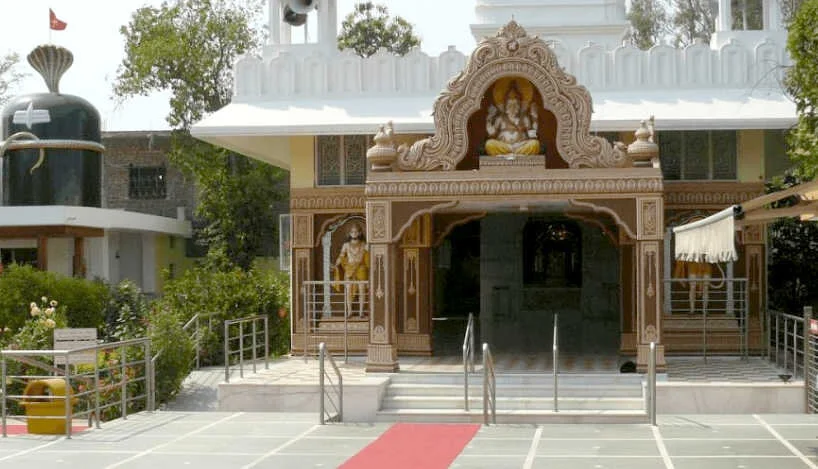
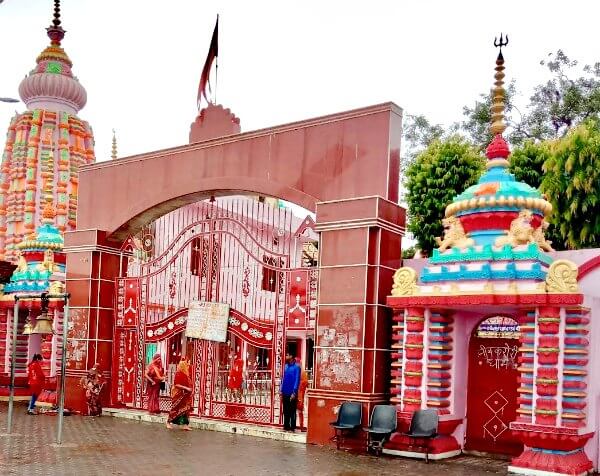
Over the next two decades, he also got set up temples and ashrams at various other places like- Delhi, Vrindavan, Kanpur, Shimla and Lucknow. Later, around 108 of temples and ashrams have been built in his name across the world. However, he himself never clanged to any of the ashrams, but kept wandering and remained available to one and all.
The life of Babaji was full of miracles, blessings and grace. The compilation is voluminous. We have tried to narrate some of them in a separate section of ‘Blessings of the Beyond’. However, to give a glimpse of the same, a few are narrated here under.
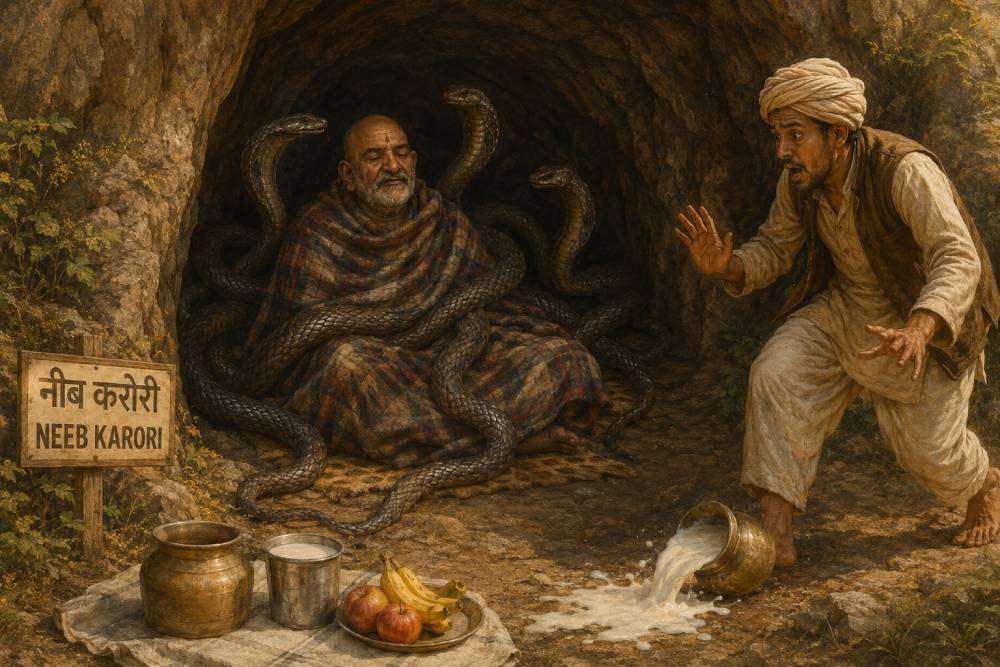
While doing Sadhna in the cave of village Neeb Karori, nobody was allowed inside. The milk and fruits were kept outside which he used to take only after coming outside. Once an innocent villager named Gopal couldn’t resist and entered the cave to offer him milk. There he saw him lying in a trance enfolded by huge snakes. He got fainted slipping off the pot. Hearing the sound, Babaji got up and made him awake. He counselled him not to enter again.
Sometime in 1958, he boarded a train. Being a wandering hermit, he had no tickets and the TTE detrained him. He got down and sat near a rock. But the train refused to move even a single inch, in spite of all efforts by the Driver and the technical staff. Somehow, a Magistrate from a nearby place recognized him and advised the railway officers to go and bring him back. They apologized before Babaji and prayed him to grace the train. He agreed to forgive them only on condition that they’ll not harass any innocent Sadhu again, and a station will be built near the place. The moment Babaji entered the train, it started moving again. On that spot a railway station has been built named ‘Neeb Karori’. Then onwards people started calling him as — ‘Baba Neeb Karori’.
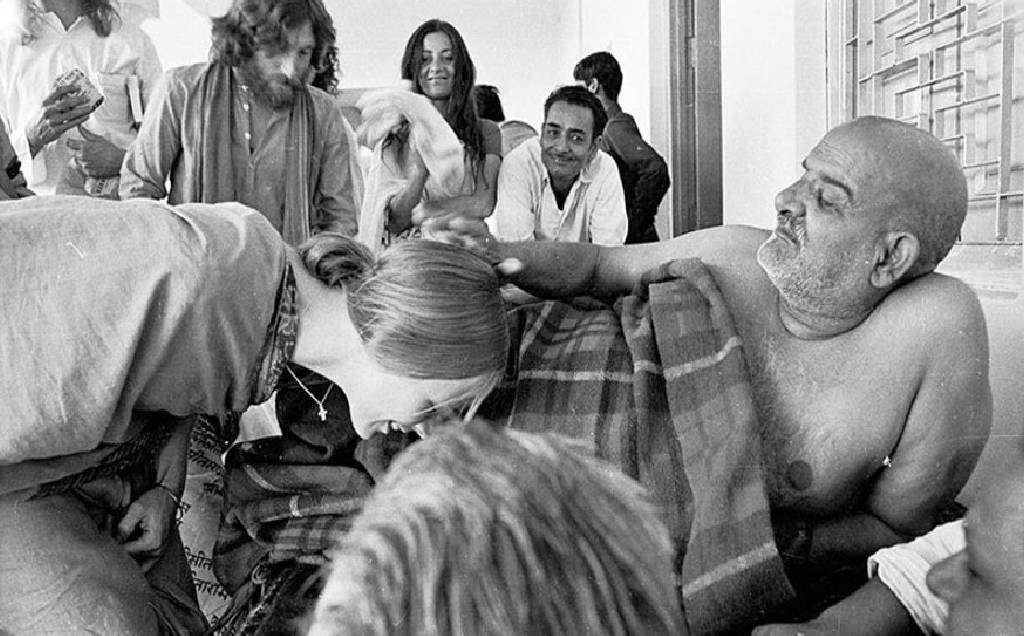
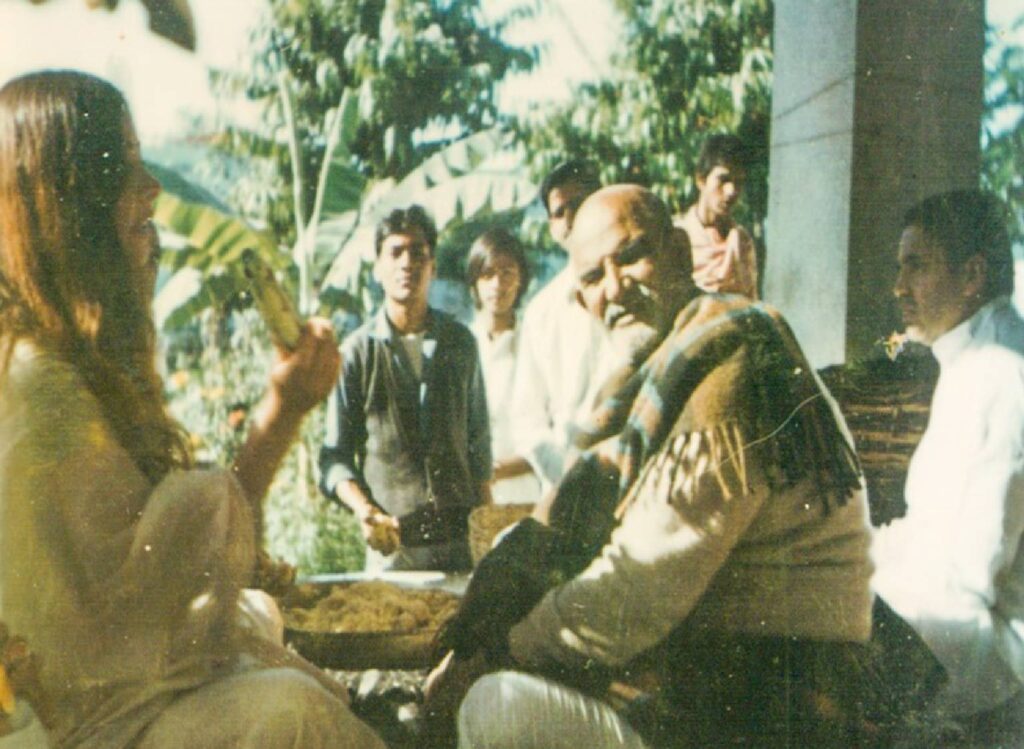
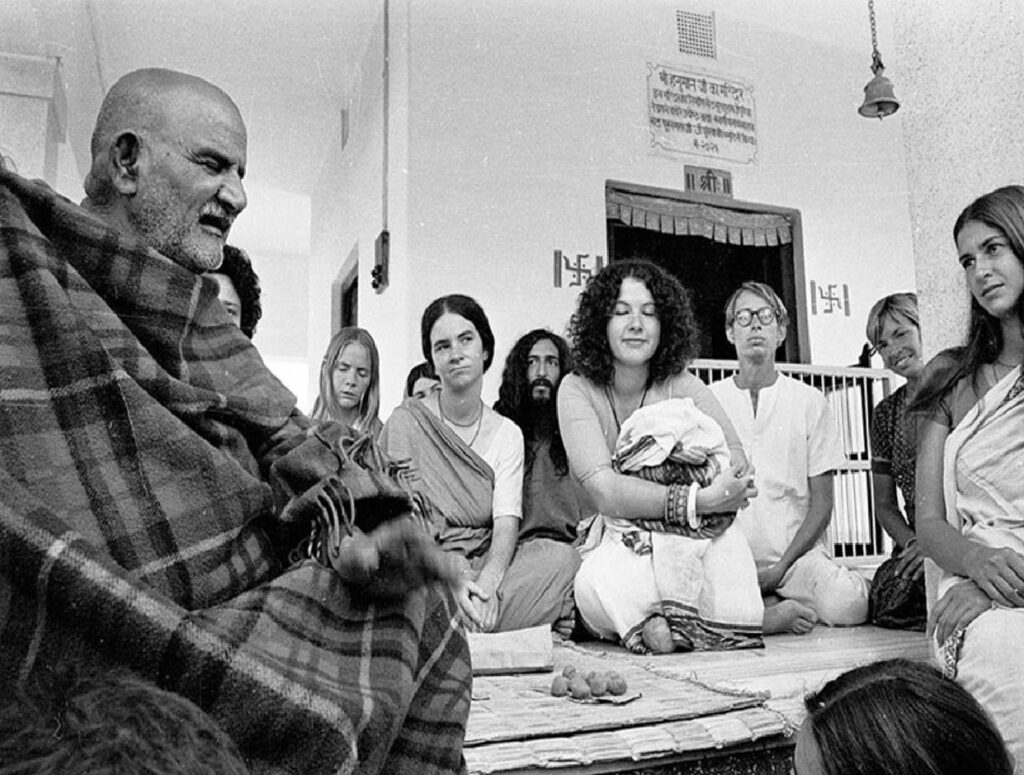
By his mere grace, he was able to change the heart of Colonel J.C. McKenna, always mocking Indian saints & traditions, who also became his first western disciple. Similarly, Mr. Richard Alpert, a leader of American drug-cult changed completely after meeting him and became Baba Ramdas. Similarly, Mr. Jeffrey Kagel, a rock musician from Long island (USA) visited Babaji in 1970. He was disillusioned with life and highly depressed. He stayed with Babaji for 03 years with a changed name Krishna Das. His life changed miraculously. Popularly known kirtan walah, as he has released over a dozen albums of traditional Indian Mantras with western melodies and received a Grammy nomination in 2013 for his album Live Ananda.
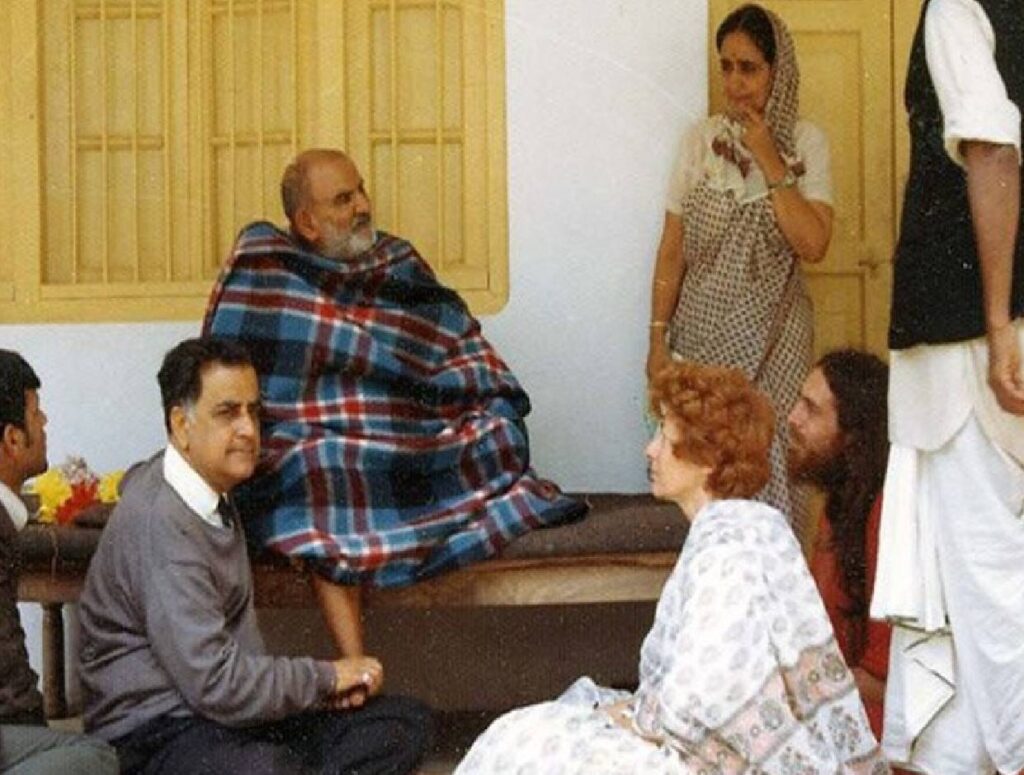
The marvels of his love mantled many distinguished devotees like Sri V.V. Giri, former President of India, Sri Gopal Swarup Pathak, former Vice President of India, Justice Vasudev Mukherjee, Sri Jugal Kishore Birla, Sumitra Nandan Pant, famous Hindi poet, Dada Sudhir Mukherji, a professor of Allahabad University, Sri Krishna Dass , a social worker and nominee of Grammy award, Sri Jai Uttal, a famous musician and Dr. Larry Brilliant, the former Director of Google’s philanthropic arm Google.org and Convenor of the U.N.O. smallpox eradication program, Mr. Daniel Goleman, the author of the famous book ‘Emotional Intelligence’, Mr. Steve Jobs, the founder of Apple Inc., Mark Juckerberg, the founder of Facebook, Mr. John Bush, famous filmmaker and Ms. Julia Robert, the famous Hollywood actress – to name a few. Even in the present time, there are millions of his devotees among the common people as well as noted personalities; and everyone has numerous stories of the divine touching his/her life.
On his inspiration, Sri Ramdas and Larry Brilliant also established ‘The Seva Foundation’, an international health organisation in Berkely, California. Some of his disciples also built a Hanuman temple and ashram in Taos, New Mexico, USA. Also, there have been 100s of other temples & ashrams built by his disciples all across the world.
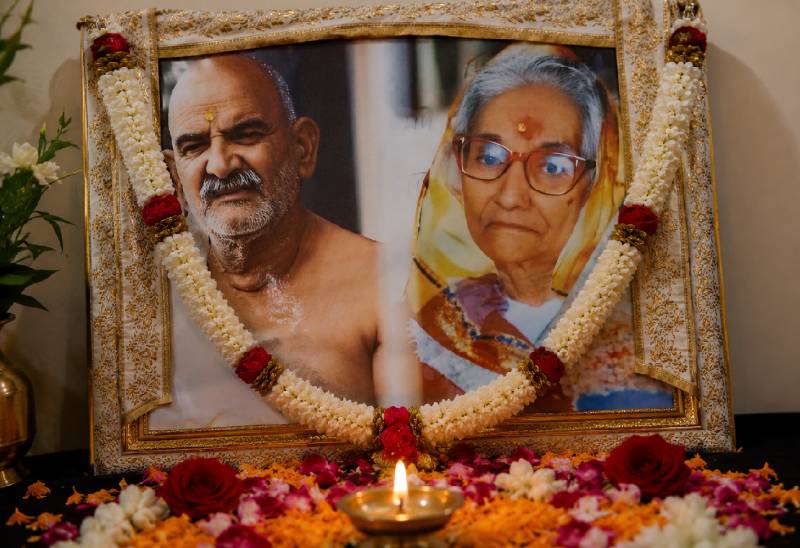
Param-pujya Babaji left his mortal body on 11th September 1973 in Vrindavan chanting his last words – “Jai Jagdish Hare”. However, still he exists, for those who love him.
Param-pujya Babaji never propagated any particular method of worship, religious philosophy or cult. In spite of being a ‘Siddh-yogi’ of the highest order, his biggest specialty lied in simplicity. He never believed in keeping long hair, beard, tilak-chhap or wearing any pretentious abode. He just believed in leading a true and simple life; and remaining connected to the divine by taking ‘Ram naam’ regularly. His core teaching was – Love & Serve. For him there was no religion better than serving the needy people; and there was no philosophy better than loving the God present in every being of this existence.
He firmly believed in One-ness of the Divine, manifested through one-ness of the mankind. For him, the term ‘Ram’ depicted the divine-supreme, param-brahma or ultimate life-energy present in and flowing through every being of this creation and hence advised to keep connected with the same. For him, that was no different from any other word depicting the same. Once in Varanasi he told “Ram and Shiv are the same”. In spite of being an ardent disciple of lord Sri Ram, he chose to stay and take his last breath in Vrindavan, the land of lord Sri Krishna. For him, “Ram and Krishna were the same”. He also always revered ‘Devi Annapurna’ or ‘Vishnu-maya’ nurturing and regulating everything on the wishes of the divine-supreme. He made her temple in every ashram. However, he used to say, “Instead of trying to see God in a particular appearance, it is better to see him in everything”
For him, all the entities we worship (or followed by the religions of the world) are manifestations of the same supreme-divine; and are able to lead you in your spiritual pursuits, if devoted to in a true sense. In one instance, to a follower of Christianity he advised to follow Jesus Christ if he wants, as the divine is one and same. However, for him the easiest way to realize that, is through selfless service of the humanity and other beings of the creation.
In the words of Param-pujya Babaji, “The whole universe is our home and all residing in it belong to our family. Every woman is a mother or sister and every man a father or brother. This is all God’s family. You can do service of the highest order only if your thoughts are centred on God.”
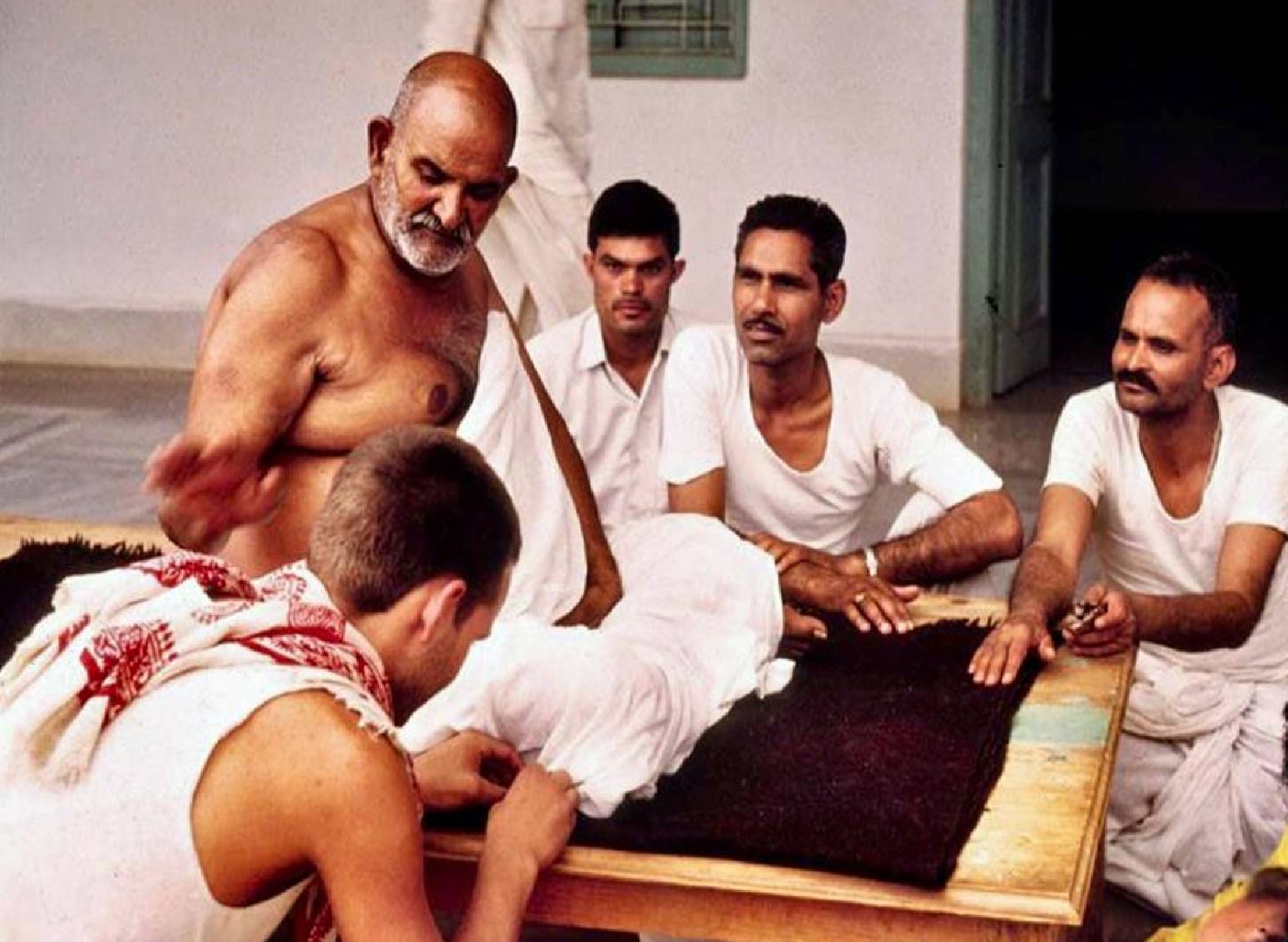
Babaji was much beyond any caste, creed, religion, region or gender. His followers, majorly constituting women and even children, ranged from every walk of the lives, belonging to every part of the world. He was even beyond the concepts of pap & punya. He was available to all who loved him and believed in him. He didn’t even preach anybody to do something or not to do anything. However, he touched every life he met; and the people started leaving their bad habits and changing at their own. He took care of every problem and crisis of his disciples, many times without even letting them know, as a mother takes care of his child. He always treated his disciples like his own children and used to say, “you feel pestered with a few children, but I have so many.”
Discover timeless wisdom and spiritual guidance through the divine words of Neem Karoli Baba.
(Inspired by the teachings of Neem Karoli Baba)
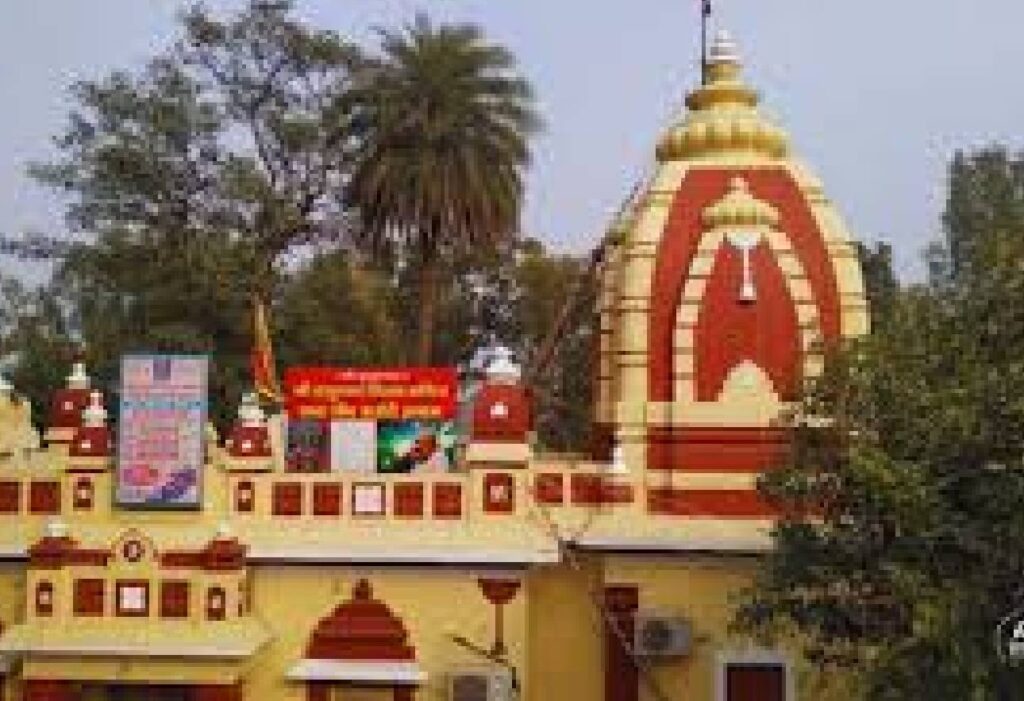
It was the second proper Hanuman temple set up and consecrated personally by Babaji inaugurated on 15th June 1964. He stayed there majorly in the later years of his life. It is run by a ‘Management Committee’ notified by the Government of Uttar Pradesh in accordance with a ‘Scheme of Administration’ notified in 1974.
Read More
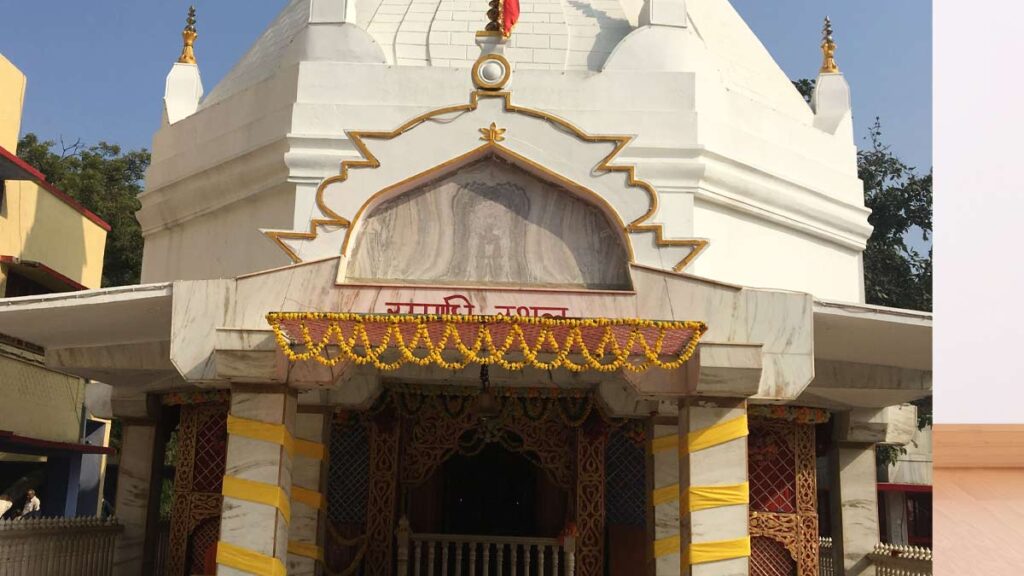
The first temple was inaugurated in 1967. The idol of Hanuman ji brought from Jaipur was initially found broken. However, when opened again, it was seen in a sound condition with grace of pujya Babaji. It has got a special significance as his ashes and a Mahasamadhi Mandir are housed within the campus. It is managed by the NKB Divine Meditation Foundation. Web address: nkbashram.org.
Read More
Bela road, North Delhi: Pujya Babaji revealed his devotees that there was an ancient Hanuman idol buried near the Yamuna bank. The site was excavated and the idol was actually found in 1961. Initially a small temple and ashram was built with the help of Sri Jugal Kishor Birla ji. Babaji used to say that Sri Hanuman ji was sleeping there and hence nobody will be able to have darshan except on the call of Sri Hanuman ji. He had personally inaugurated this temple on 4th December 1965. Sri Narayan Swami, the legendary disciple of Babaji was nominated as the chief priest. It is managed by a local society/trust.
Read More
Rishikesh Ashram, Virbhadra: Initially the land was taken on lease by pujya Babaji from the forest department.
Later, a huge 40-feet Hanuman idol was set up and the ashram was formally established by Siddhi Ma on 10th July 1984. It is managed by the Vrindavan ashram foundation.
Bavaniya Dham, Morbi, Gujrat: Here, the 1st Hanuman idol was set up and consecrated personally by Babaji sometime in 1912-13. He stayed there for 6-7 years and did rigorous Sadhna in a nearby pond. Later, a temple was built with a beautiful campus. Web address: vavaniyadham.com.
Read More
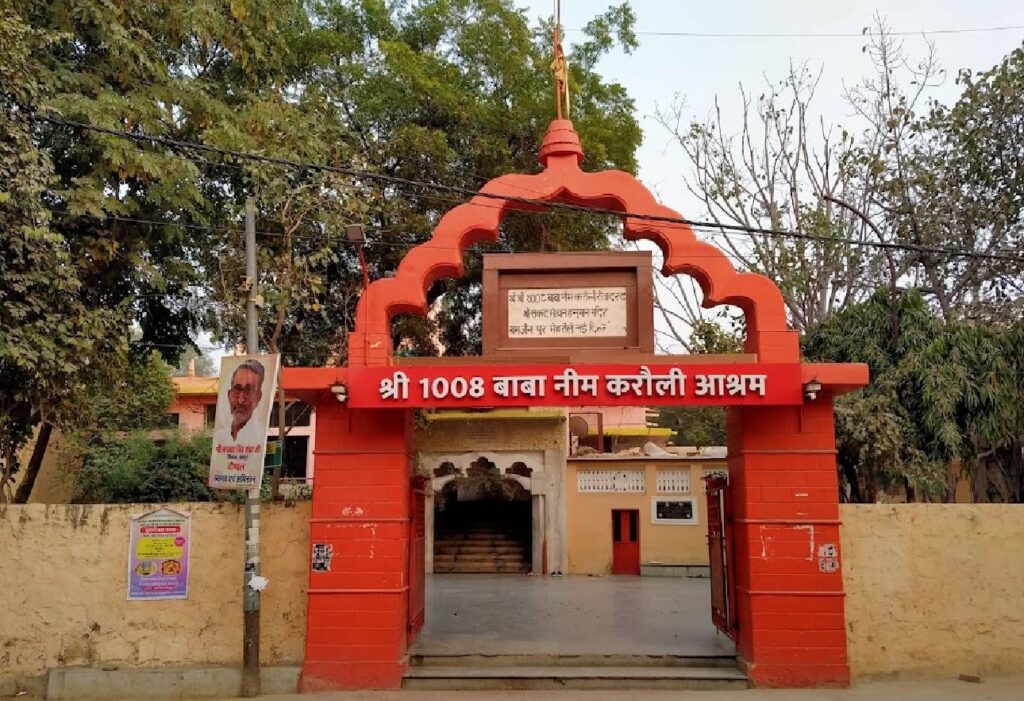
Farrukhabad, U.P.: Here the 2nd Hanuman idol was built by his own hands only using cow-dung, mud and lime, sometime in 1918-19; on the top of the cave built for him by the villagers. He stayed there upto 1930. Later a beautiful temple has come up with huge campus, which is managed under the supervision of the District Magistrate. Web address: nkbashram.org.
Read More
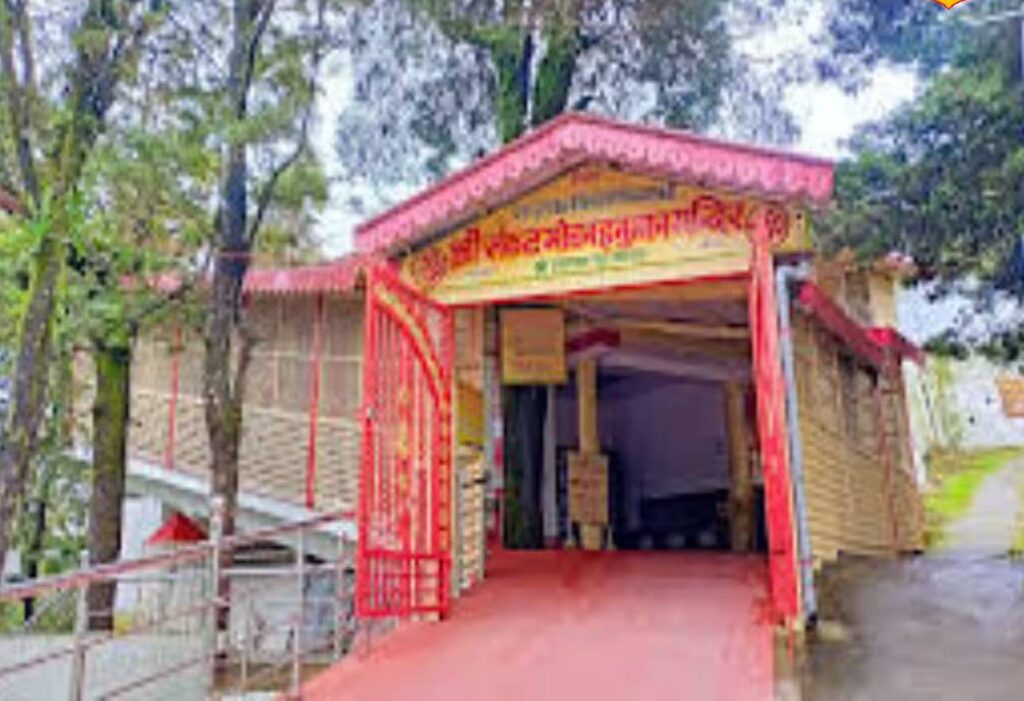
Hanumangarh Temple, Nainital: It was the first proper Hanuman temple set up and consecrated personally by Babaji sometime in 1958. It is managed by the Kainchi Dham Management Committee. Web address: sreekainchimandirtrust.org.
Read More
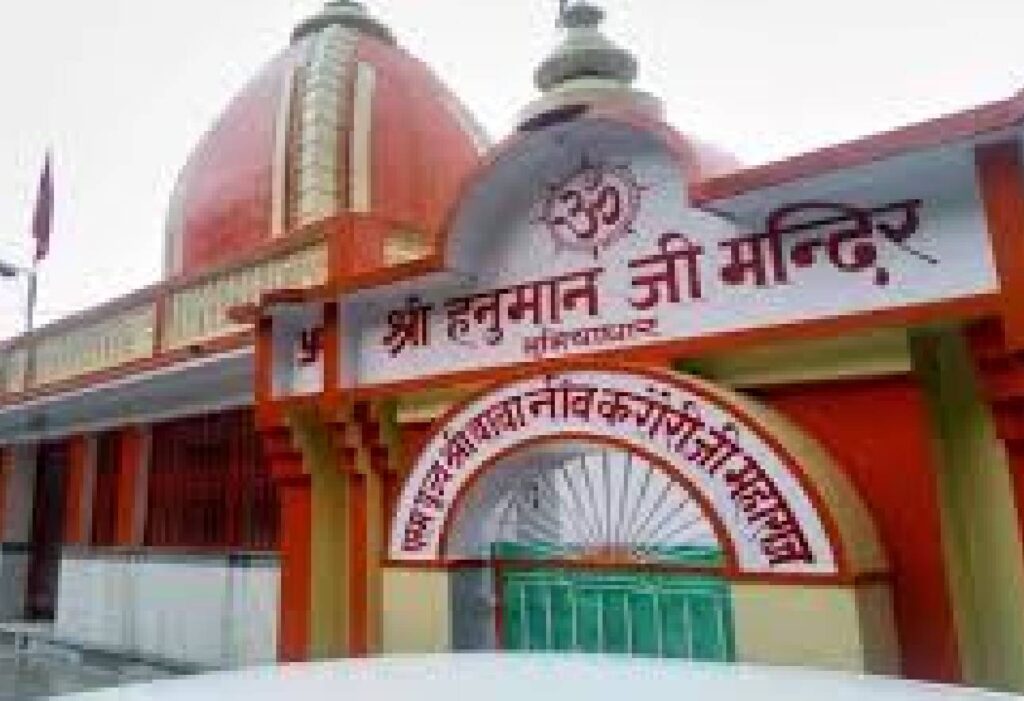
Sri Hanuman Mandir, Bhumiadhar: Initially an ashram was set up on a land offered by Sri Pooran Singh ji in 1961. Later, a Hanuman idol was installed in a properly built temple in 1965. Here Babaji used spent a great deal of time, and the spiritual awakening of Richard Alpert (Baba Ramdas) also took place. It is managed by the Kainchi Dham Management Committee.
Read More
It was the second proper Hanuman temple set up and consecrated personally by Babaji inaugurated on 15th June 1964. He stayed there majorly in the later years of his life. It is run by a ‘Management Committee’ notified by the Government of Uttar Pradesh in accordance with a ‘Scheme of Administration’ notified in 1974.
Read More
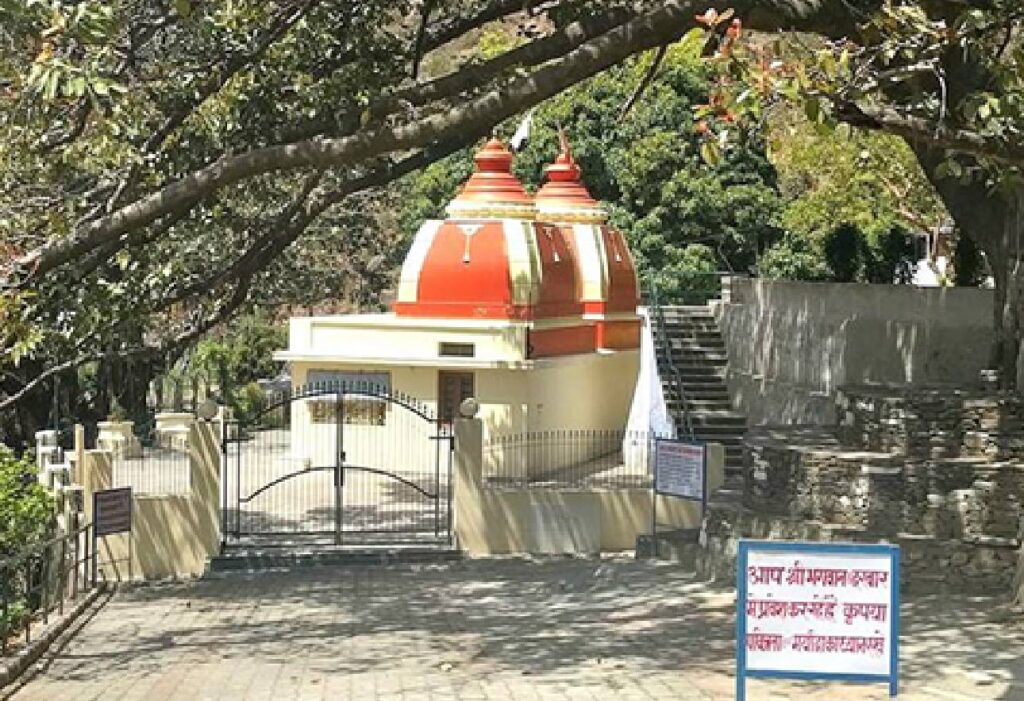
Previously the divine playground of Somwari Maharaj, Babaji chose this secluded place for construction of a Hanuman temple. Later the work was completed by Siddhi Ma who also renovated the old Shiv Mandir sometime in 1970. It is managed by the Kainchi Dham Management Committee.
Read More
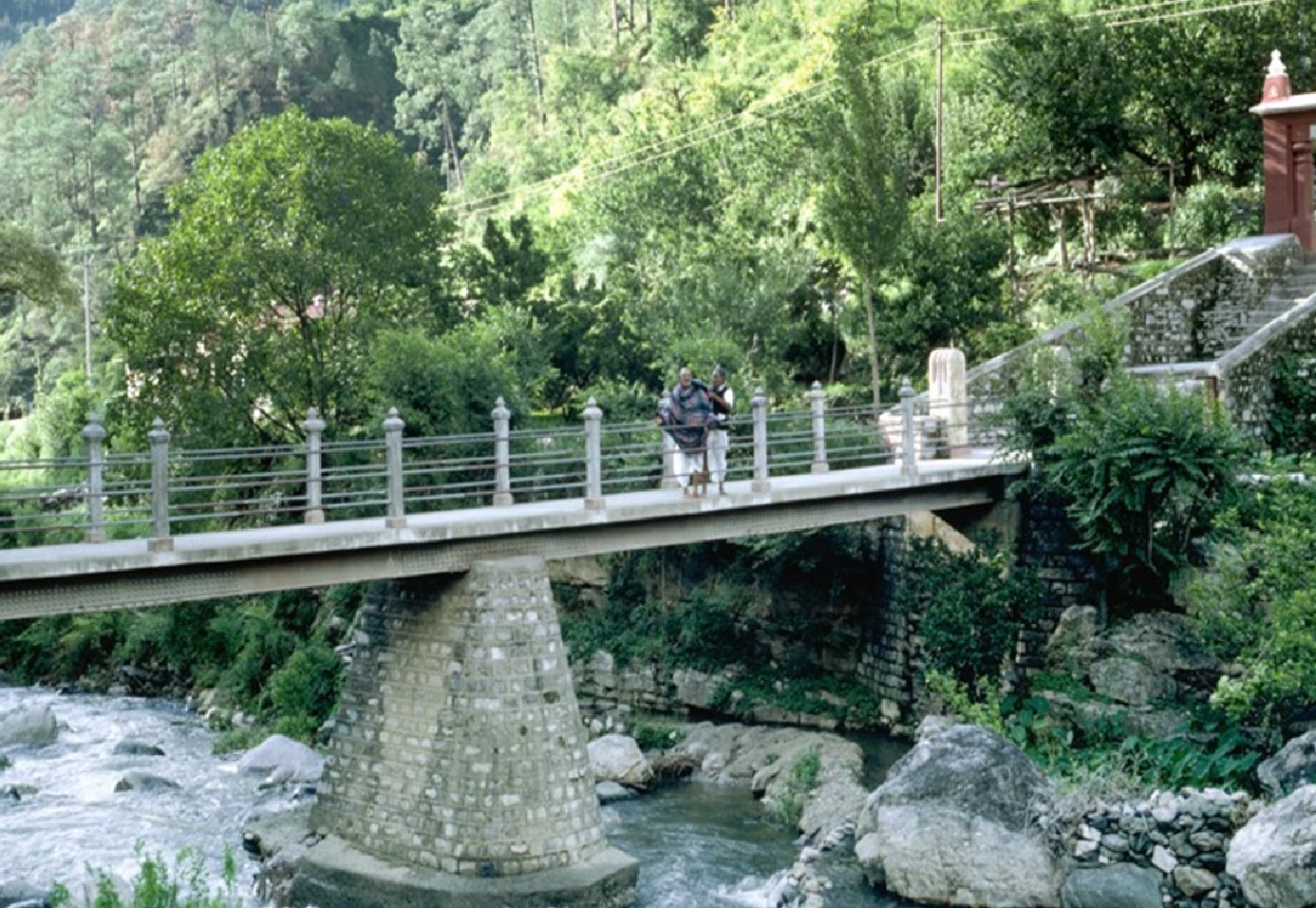
Initially a small ashram with Hanuman idol was built by Babaji in 1960. With a massive flood, the ashram as well as the nearby bridge was swept away but the idol remained untouched. Later, a magnificent temple was inaugurated on 26th Jan. 1967. Babaji termed it as ‘The Governer General of all Hanumans’. It is managed by Neem Karoli Baba Ashram Trust.
Read More
SW Delhi, Mahrauli: Located at Jaunapur-Mandi road of Mahrauli, it was inaugurated by Pujya Babaji in the summers of 1974, shortly before his mahasamadhi. This ashram has the 2nd largest idol of Devi Annapurna. In January 2001 a huge Gaushala was also built. It is managed by a local society/trust.
Read More
Bela road, North Delhi: Pujya Babaji revealed his devotees that there was an ancient Hanuman idol buried near the Yamuna bank. The site was excavated and the idol was actually found in 1961. Initially a small temple and ashram was built with the help of Sri Jugal Kishor Birla ji. Babaji used to say that Sri Hanuman ji was sleeping there and hence nobody will be able to have darshan except on the call of Sri Hanuman ji. He had personally inaugurated this temple on 4th December 1965. Sri Narayan Swami, the legendary disciple of Babaji was nominated as the chief priest. It is managed by a local society/trust.
Read More(Inspired by the teachings of Neem Karoli Baba)
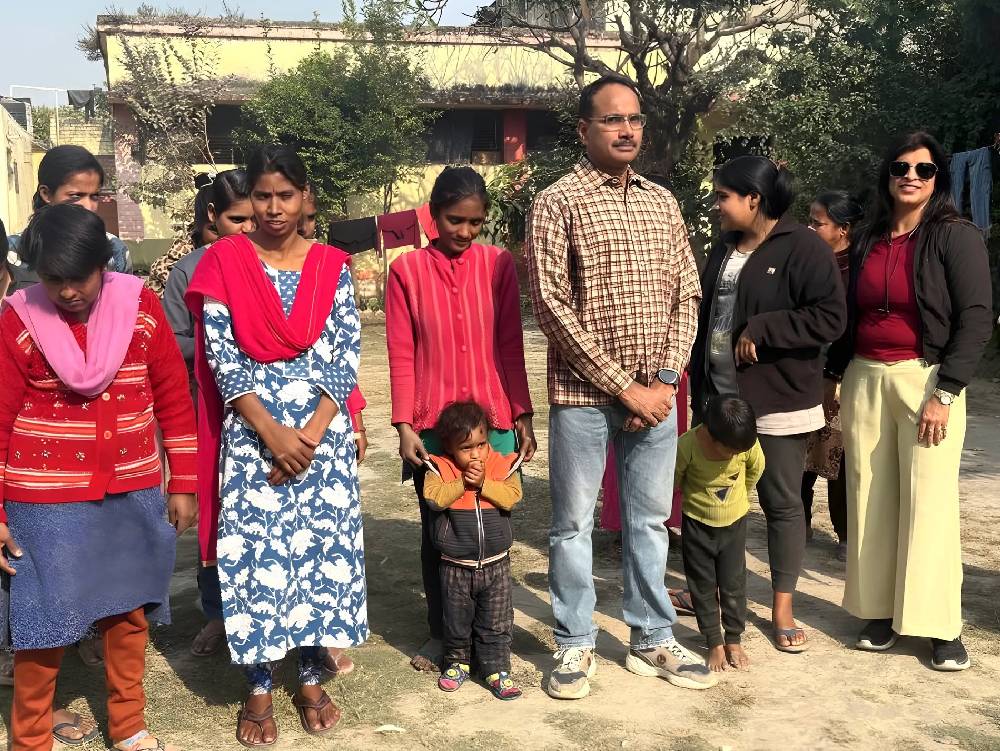
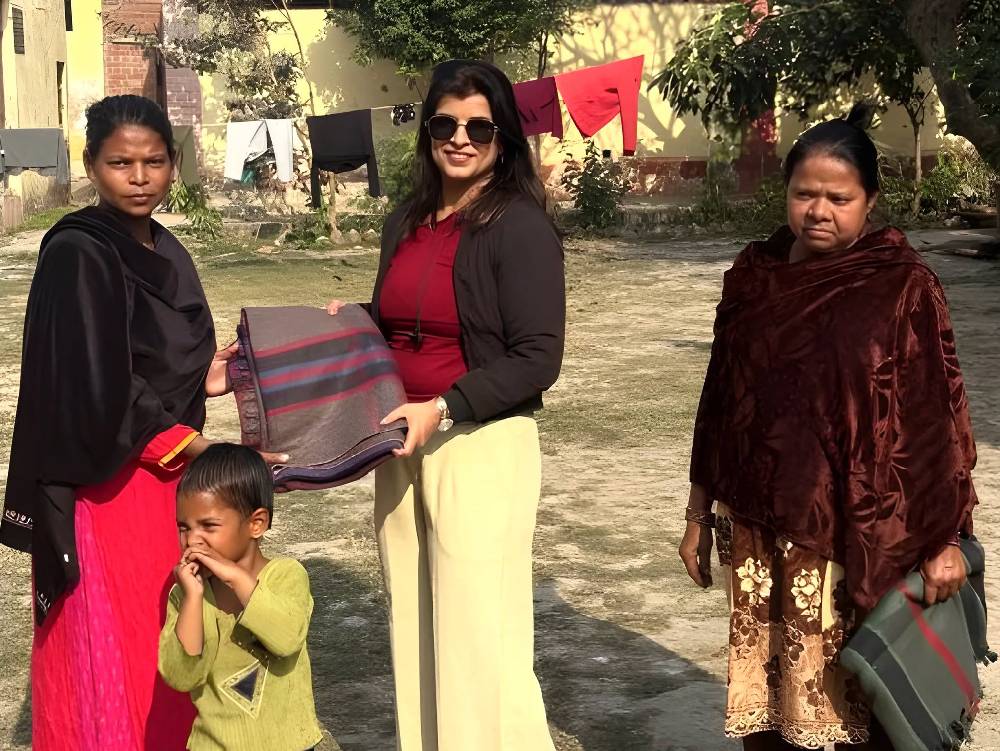
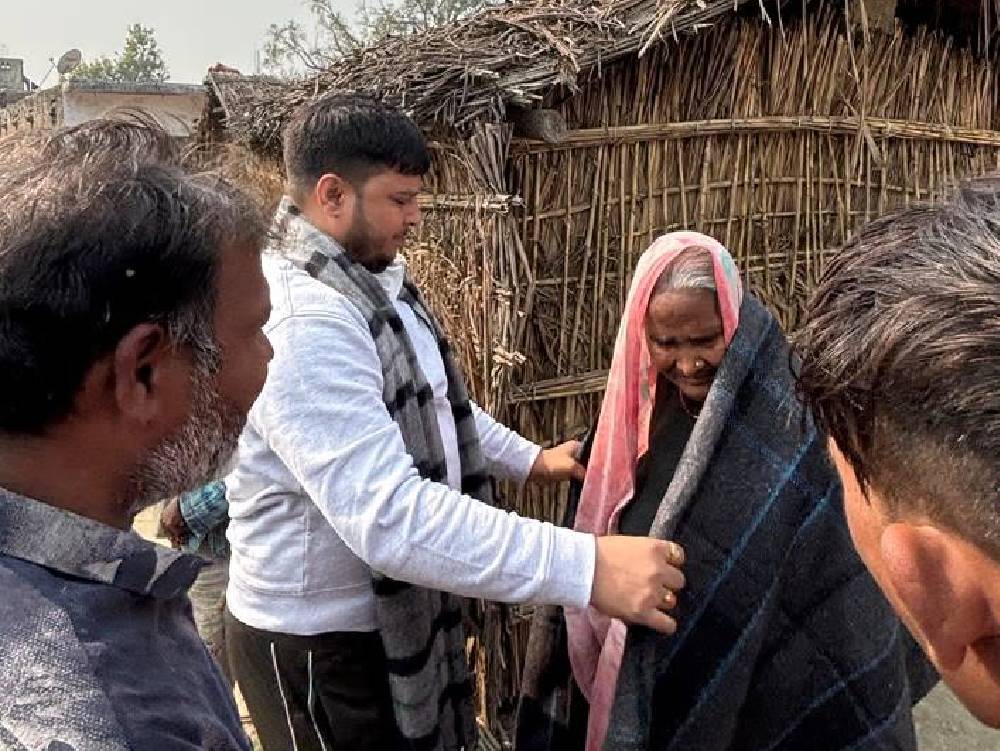
BNK Mission works with a simple vision — to serve humanity with compassion and care. Guided by Neem Karoli Baba’s teachings, we are making a real difference in people’s lives.
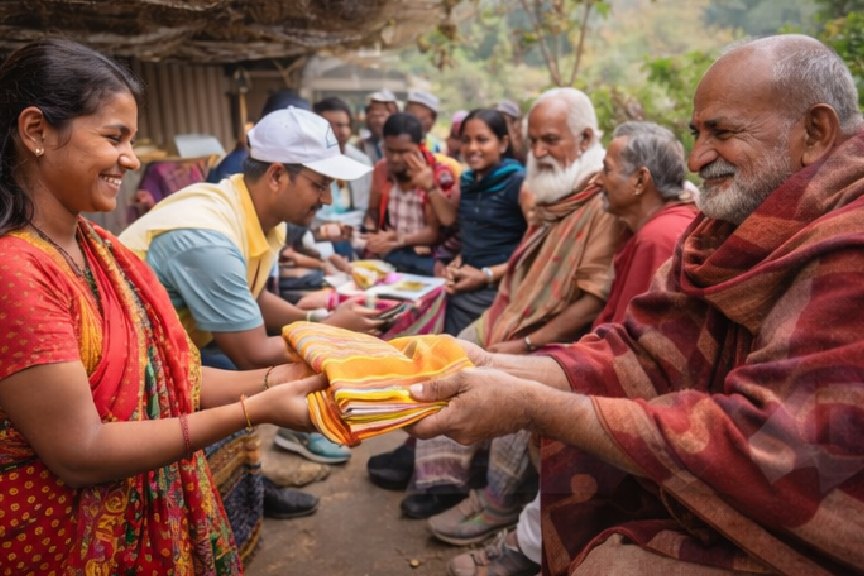
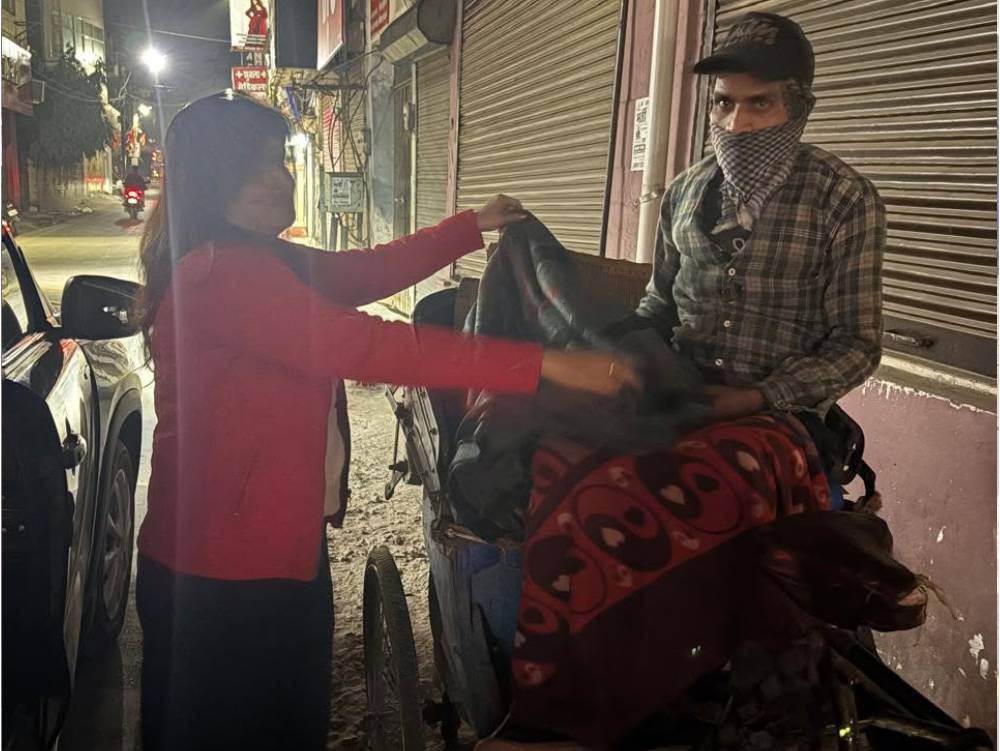
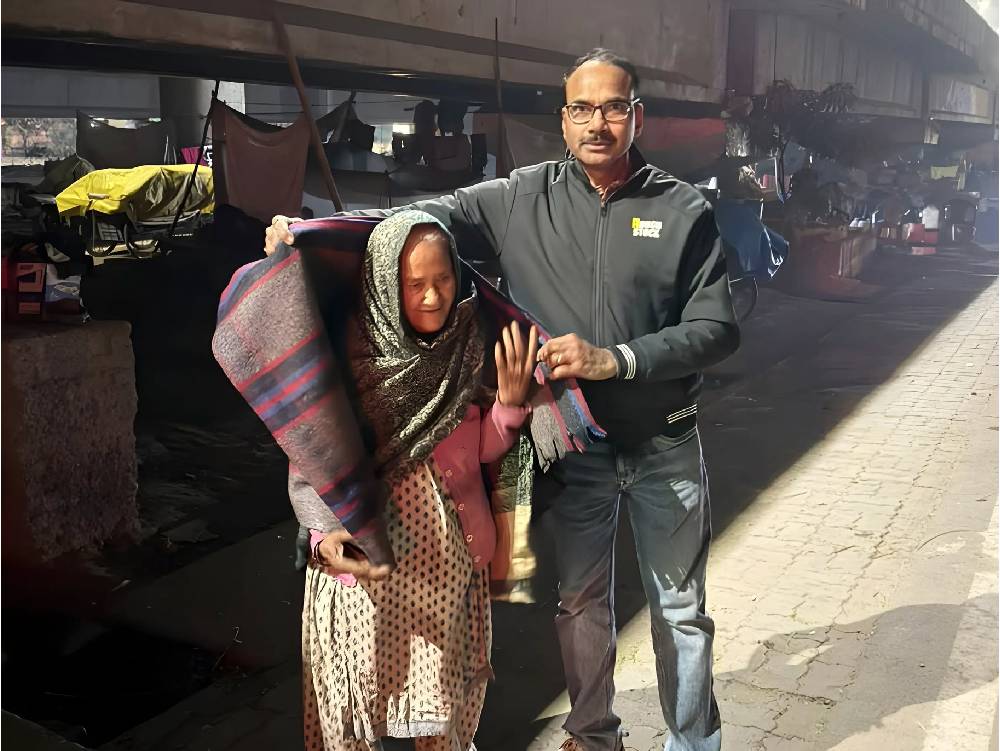
We believe no one should sleep hungry. BNK Mission regularly organizes food distribution drives, providing nutritious meals to the underprivileged, homeless, and those in need.
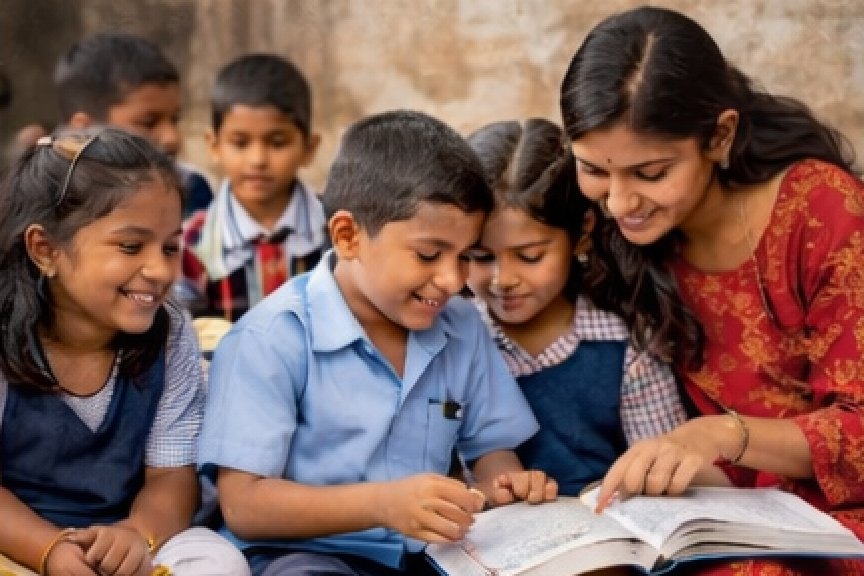
Education is the foundation of transformation. We support underprivileged children by providing learning resources, mentorship, and access to quality education.
Illness should never become a barrier to hope. We support underprivileged patients by providing medical assistance, medicines, healthcare resources, and access .
(Inspired by the teachings of Neem Karoli Baba)
BNK Mission works with a simple vision — to serve humanity with compassion and care. Guided by Neem Karoli Baba’s teachings, we are making a real difference in people’s lives.
We believe no one should sleep hungry. BNK Mission regularly organizes food distribution drives, providing nutritious meals to the underprivileged, homeless, and those in need.
Education is the foundation of transformation. We support underprivileged children by providing learning resources, mentorship, and access to quality education.
At BNK Mission, inspired by the teachings of Neem Karoli Baba, we are dedicated to transforming lives through love, service, and compassion. From education and healthcare to food support and community development, every step we take is aimed at building a better and more caring society.
Stay connected with our upcoming events as we continue to spread hope, organize impactful initiatives, and bring communities together for a greater cause.

Excepteur sint occaecat cupidatat non proident, sunt in culpa qui officia deserunt mollit anim id est laborum.
20 जून से 20 जुलाई।
नीम करौली बाबा के महासमाधि दिवस पर श्रद्धालु उनकी दिव्य शिक्षाओं एवं सेवा भाव को स्मरण करते हुए भक्ति, प्रार्थना और सत्संग में सहभागी बनते हैं।
11 सितंबर


Lorem ipsum dolor sit amet, consectetur adipiscing elit, sed do eiusmod tempor incididunt.
Stay connected with our upcoming events